


My doctor told me to wear compression socks for my leg swelling, but she never specified how long to wear them each day. I wore them for 18 hours straight the first week, including sleeping in them, because I figured more time equals better results. Wrong. I woke up with uncomfortable pressure marks, and my legs felt worse, not better.
That’s when I learned that how long you wear compression socks matters just as much as wearing them at all. Too little time and you don’t get adequate benefits. Too much time, especially at the wrong times, can cause discomfort or even problems.
The answer to how long to wear compression socks depends entirely on why you’re wearing them and what compression level you’re using. Someone with travel swelling needs completely different wearing time than someone managing chronic venous insufficiency. Additionally, medical-grade compression has different duration guidelines than light preventive compression.
Let me break down exactly how long to wear compression socks for every major use case, when to take them off, and the safety guidelines that keep compression effective without causing problems.
The Quick Answer: How Long to Wear Compression Socks
Most people should wear compression socks for eight to twelve hours during waking activities when circulation is challenged by gravity and immobility. Wear compression during times when you sit or stand for extended periods, then remove them before bed. Medical-grade compression (20 to 40 mmHg) requires more specific timing based on your condition and doctor’s guidance, while light compression (8 to 20 mmHg) can generally be worn all day without issues for healthy individuals.
The key principle is wearing compression when your circulation needs help, which is primarily when you’re upright and stationary. Lying down removes gravity from the equation, which means your veins don’t need external compression assistance during sleep.
However, this general guideline has important exceptions. Post surgery patients might need 24-hour compression. People with severe venous disease might require a different timing. Athletes use compression for specific training and recovery windows. Understanding your specific situation determines your ideal wearing duration.
Understanding Why Duration Matters for Compression Effectiveness
Before diving into specific timeframes for how long to wear compression socks, you need to understand why timing affects their effectiveness and safety.
The Circulation Challenge of Being Upright
Your cardiovascular system evolved for movement. When you’re walking, your calf muscles contract and squeeze your veins, pushing blood back toward your heart. This muscle pump action works beautifully during activity.
However, modern life involves hours of sitting at desks or standing in one place. During these stationary upright periods, your calf muscles aren’t actively pumping, so blood pools in your lower legs. This pooling worsens the longer you remain still and upright.
That’s why how long you wear compression socks should align with how long you’re in these challenging positions. If you sit at a desk for eight hours, wearing compression during those eight hours prevents the pooling that would otherwise occur. The compression essentially replaces your inactive muscle pump.
Meanwhile, when you lie down to sleep, gravity stops fighting your circulation. Blood returns to your heart easily in horizontal positions. Most people don’t need compression overnight because the circulatory challenge disappears when you’re lying flat.
How Compression Level Affects Safe Duration
The strength of compression dramatically impacts how long you can safely wear compression socks. Light compression (8 to 15 mmHg) is gentle enough for extended all-day wear without concerns. This mild pressure provides preventive benefits without significant restriction.
Moderate compression (15 to 20 mmHg) also tolerates all-day wear well for most healthy people. This is the sweet spot for prevention and mild symptom management. You can wear this level throughout your workday and activities without issues.
Firm compression (20 to 30 mmHg) enters medical territory. While many people wear this level all day, you should follow medical guidance about the duration. Some conditions require consistent all-day wear, while others need breaks.
Extra firm compression (30 to 40 mmHg and higher) absolutely requires medical supervision for duration. These high compression levels can restrict circulation if worn inappropriately or for too long without proper indication.
Understanding how long to wear compression socks based on compression level prevents using too much pressure for too long, which can paradoxically cause circulation problems instead of solving them.

Duration Guidelines by Specific Use Case
Now let’s get specific about how long to wear compression socks for different situations and conditions.
For Preventing Travel Swelling and Blood Clots
If you’re wearing compression to prevent swelling during flights or long car trips, wear them from the moment you start traveling until you reach your destination and can move around freely.
For flights, put compression socks on before arriving at the airport. Keep them on throughout the flight, and wear them for at least two hours after landing. The total duration might be six to twelve hours, depending on travel length.
The extended wearing time is important because DVT risk remains elevated for several hours after prolonged immobility ends. Your circulation needs time to fully recover normal function after being compressed in airplane seats.
However, once you’re at your destination and moving normally, you can remove compression. You don’t need to wear travel compression socks all day, every day of your trip, unless you’re doing additional high-risk activities like long sightseeing walks where leg fatigue becomes a concern.
For comprehensive guidance on compression effectiveness during travel, read our evidence-based article on do compression socks actually work.
For Standing or Sitting Jobs
People who stand or sit for work need compression during their working hours. If you work an eight-hour shift, wear compression for those eight hours plus commute time if your commute involves sitting.
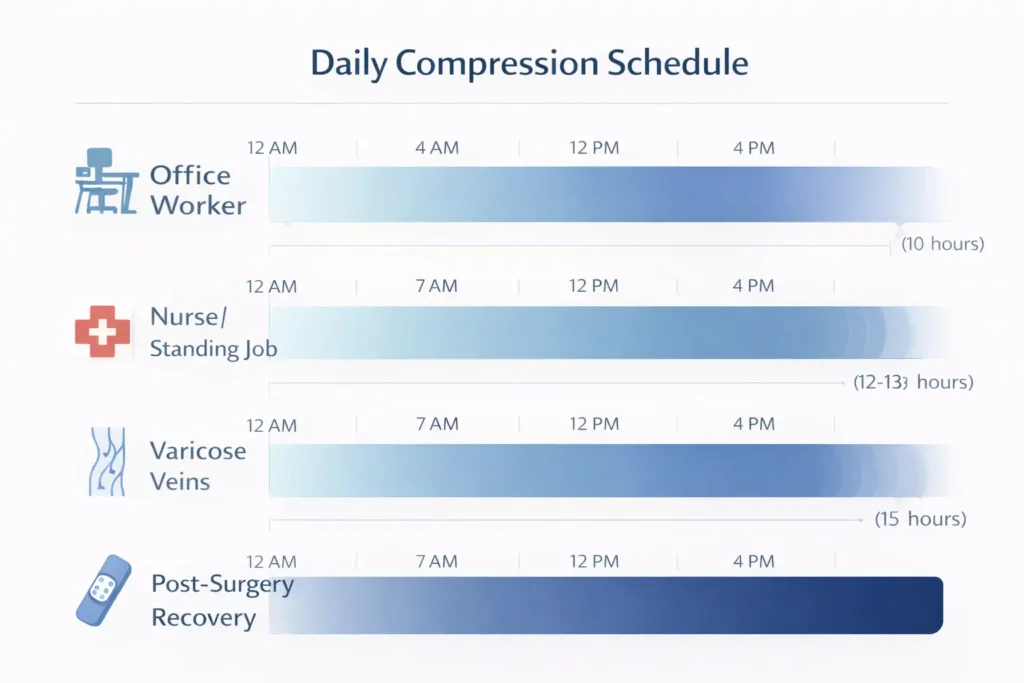
Nurses often wear compression for 12-hour shifts. This extended duration is safe with appropriate compression levels (15 to 20 mmHg typically). The compression prevents the significant swelling that would otherwise accumulate during those long periods on their feet.
Office workers sitting at desks benefit from wearing compression throughout their workday. Eight to ten hours of compression during desk work prevents the ankle and calf swelling that develops from prolonged sitting.
Remove compression socks when you get home and can elevate your legs, move freely, or lie down. Your circulation no longer needs the external support once you’re out of the challenging work position.
If you’re wondering whether your job specifically benefits from compression, consider whether you experience leg swelling, achiness, or heaviness by the end of your work shift. If yes, compression during those hours helps significantly.
For Athletic Training and Recovery
Athletes use compression differently depending on whether they’re targeting performance or recovery. How long to wear compression socks varies based on these goals.
During training or competition, some athletes wear compression throughout their activity. This might be one to three hours, depending on the sport. Research shows modest benefits during activity, primarily from improved proprioception and reduced muscle vibration.
However, recovery compression shows stronger research support. Athletes should wear compression for two to four hours immediately after intense training or competition. Some athletes wear compression overnight after particularly demanding sessions, though medical guidance on this varies.
Cyclists benefit from compression during long rides (two to six hours) to reduce leg fatigue. The consistent pedaling motion combined with compression helps maintain circulation during extended riding. Check our tested guide on the best cycling socks for sport-specific compression recommendations.
Don’t wear athletic compression 24/7. Your body needs recovery time without external pressure. Cycle compression on during and immediately after high stress activities, then allow normal circulation the rest of the time.
For Varicose Veins and Chronic Venous Insufficiency
Medical conditions require more specific guidance on how long to wear compression socks. Varicose veins and CVI typically need consistent daily compression for maximum benefit.
Most doctors recommend wearing 20 to 30 mmHg compression from morning until evening for varicose vein management. This usually means putting compression on when you wake up and removing it before bed, totaling about 12 to 16 hours daily.
The key is consistency. Wearing compression stockings sporadically won’t provide the cumulative benefits needed to manage vein disease. Daily wear prevents worsening and reduces symptoms over time.
However, you should still remove compression at night. Even with venous disease, lying flat allows adequate venous return without compression assistance. Additionally, wearing compression 24/7 increases skin irritation risk and reduces compliance because people get frustrated with constant wear.
For detailed information on managing varicose veins, see our comprehensive review of support socks for varicose veins.
For Pregnancy Swelling
Pregnant women experiencing leg swelling should wear compression during waking hours, which typically means eight to twelve hours daily. Put compression socks on in the morning and wear them through daily activities.
Pregnancy swelling usually worsens as the day progresses and when standing. Compression prevents this accumulation. However, pregnant women should absolutely remove compression at night to avoid any circulation restriction while sleeping.
Most pregnant women use 15 to 20 mmHg compression, which is safe for extended daytime wear. Always check with your OB before starting compression, especially if you have any pregnancy complications or circulation concerns.
The duration of compression wear might increase as pregnancy progresses and swelling worsens. The first trimester might need only occasional compression, while the third trimester might require daily all-day wear.
For Post Surgery Recovery
Post-surgical compression has the most specific timing requirements. How long to wear compression socks after surgery depends entirely on your surgeon’s instructions, which are based on your specific procedure and risk factors.
Some post-surgical protocols require 24-hour compression for the first week or two. This continuous wear prevents dangerous blood clots when mobility is severely limited. Patients might only remove compression for brief showering periods.
Other surgeries require daytime compression only, typically for two to six weeks post-operation. You wear compression during waking hours and remove it at night once clot risk decreases.
Never deviate from post surgical compression guidelines without consulting your surgeon. The timing is based on your specific DVT risk, which changes as you recover and regain mobility. Stopping compression too early increases clot risk, while wearing it longer than needed might cause unnecessary discomfort.
For Diabetic Neuropathy and Circulation Issues
Diabetics face unique considerations about how long to wear compression socks because some diabetics have arterial disease, where compression can be dangerous.
If your doctor has cleared you for compression (meaning you don’t have significant arterial disease), typical wearing time is eight to twelve hours during daytime activities. You want circulation support when upright and active, but should remove compression at night.
However, diabetics need to monitor their feet carefully while wearing compression. Check your feet every few hours for any signs of decreased circulation, skin changes, or discomfort. If you notice any concerning changes, remove compression immediately and contact your doctor.
Never sleep in compression if you’re diabetic unless specifically instructed by your doctor. Nighttime compression in diabetics with undiagnosed arterial problems can restrict blood flow when your body is trying to heal and repair overnight.
For safer diabetic sock alternatives, check our specialized guide on the best diabetic socks for men.
For Plantar Fasciitis and Foot Pain
Some people try compression for plantar fasciitis, though compression primarily helps circulation rather than structural foot problems. If you’re using compression socks with arch support features for plantar fasciitis, wearing time follows general guidelines.
Wear these socks during activities that stress your feet, typically eight to twelve hours during standing, walking, or running. Remove them during rest periods and definitely before sleep.
However, understand that true plantar fasciitis often needs dedicated support rather than compression. If standard compression timing doesn’t improve your heel pain, you likely need different interventions. Read our tested guide on compression socks for plantar fasciitis to understand which features actually help this condition.
For Nerve Pain and Neuropathy
Compression for neuropathy requires careful consideration of duration. Some people with peripheral neuropathy find gentle compression (15 to 20 mmHg) helpful for eight to ten hours during the day.
However, nerve pain need to pay extra attention to how compression feels. If compression increases numbness, tingling, or discomfort, reduce wearing time or discontinue use entirely.
Never sleep in compression if you have neuropathy because you might not feel if the compression is too tight or cutting off circulation. Your reduced sensation makes nighttime compression particularly risky.
For detailed guidance on compression and neuropathy, see our medical article on compression socks for neuropathy.

When You Should NOT Wear Compression Socks
Understanding when to remove compression is just as important as knowing how long to wear compression socks. At certain times and situations, it is necessary to take compression off.
Don’t Sleep in Compression (With Rare Exceptions)
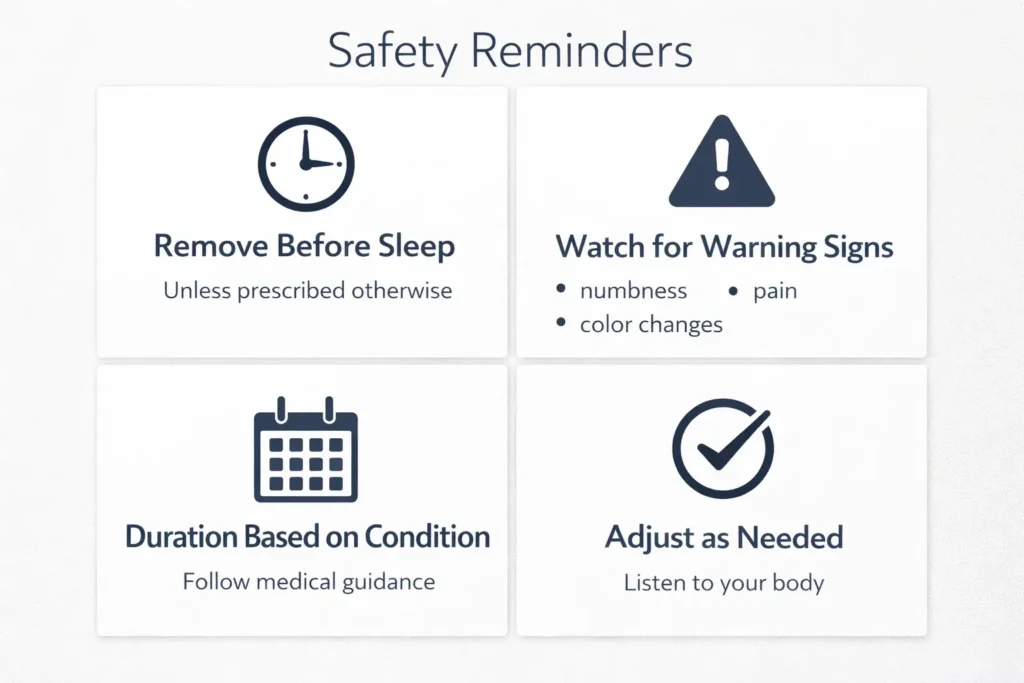
The vast majority of people should remove compression socks before sleeping. When you lie flat, gravity stops fighting your circulation. Your veins can return blood to your heart efficiently without compression assistance.
Additionally, sleeping in compression increases risks. You can’t monitor for excessive tightness or circulation problems while unconscious. The socks might shift or bunch during sleep, creating pressure points or constriction.
Some people feel uncomfortable sleeping in compression, which disrupts sleep quality. The snug pressure that feels supportive during the day might feel restrictive when you’re trying to relax.
The rare exceptions are specific medical situations where doctors prescribe 24-hour compression. Post-surgical DVT prevention sometimes requires nighttime compression for limited periods. Severe lymphedema might need continuous compression. Follow these prescriptions exactly, but don’t sleep in compression without medical guidance.
Remove Compression If You Experience Warning Signs
Regardless of how long you planned to wear compression socks, remove them immediately if you experience numbness or tingling beyond the initial adjustment period, increased pain rather than relief, skin color changes (very pale or bluish), extreme tightness that worsens, or cold feet or toes.
These warning signs indicate compression might be too strong or that you have underlying conditions making compression inappropriate. Don’t push through discomfort hoping it will improve. Remove the compression and consult a doctor if symptoms persist.
Take Breaks During Extended Wear
If you’re wearing compression for 12 hours or more, consider taking a brief break midway through if possible. Sitting down, elevating your legs, and removing compression for 15 to 30 minutes gives your skin a break and allows you to check for any developing issues.
This isn’t necessary for everyone, but people with sensitive skin, first-time compression users, or those wearing firm compression might benefit from periodic breaks during very long wearing periods.
Know When Compression Timing Isn’t Enough
If you’re wearing compression for appropriate durations but still experiencing severe symptoms, the problem might not be wearing time. You might need higher compression levels, better-fitting socks, or medical treatment beyond compression.
Don’t keep extending how long you wear compression socks, thinking more time will eventually solve severe problems. If appropriate wearing time doesn’t provide relief, consult a doctor about whether compression alone is adequate for your condition.
Maximizing Benefits: How to Time Your Compression Wear
Now that you know how long to wear compression socks for different situations, here’s how to optimize timing for best results.
Put Compression On Before Swelling Starts
The ideal time to put on compression socks is first thing in the morning, before you get out of bed, or shortly after waking, before swelling begins. Once your legs are already swollen, getting compression socks on becomes much harde,r and effectiveness decreases.
If you wait until the afternoon when your legs are already puffy, the compression fights existing swelling rather than preventing it. Starting before swelling occurs provides better results and easier application.
For people with significant morning swelling, elevate your legs for five to ten minutes before attempting to put compression on. This allows some fluid to drain, making application easier.
Align Compression with Your Challenge Periods
Think about when your circulation faces the biggest challenges, then time compression to cover those periods. If you have a morning desk job but evening activities involve lots of walking, you might wear compression primarily during sitting hours when circulation is most compromised.
Conversely, if you’re active in the morning but sit or stand still in the afternoon and evening, focus on compression wear during those later hours. The goal is to provide external circulation support when your natural muscle pump isn’t working optimally.
Consider Gradual Adjustment for First-Time Users
If you’re new to compression, you might not tolerate a full 12-hour wearing period immediately. Start with four to six hours and gradually increase duration as you adjust to the sensation.
This gradual approach helps you identify if the compression level is right before committing to all-day wear. If you can’t comfortably wear compression for even a few hours, you might need a lower compression level or better sizing rather than just shorter duration.
Coordinate Multiple Pairs for Extended Periods
If you need compression for very long periods (16 hours or more for medical reasons), consider using two different pairs. Wear one pair for eight hours, then switch to a fresh pair for the remaining time.
This isn’t about washing (you shouldn’t wear the same pair for two days without washing), but rather about giving your skin contact with fresh fabric and slightly different pressure patterns. Some people find this more comfortable for extended medical compression needs.

Common Mistakes About Compression Duration
People make predictable errors when deciding how long to wear compression socks. Avoid these pitfalls for better results and safety.
Mistake #1: Wearing Compression 24/7 Thinking More Is Better
The most common mistake is never removing compression, thinking continuous wear provides maximum benefits. Unless your doctor specifically prescribes 24-hour compression for a medical reason, this approach causes more problems than it solves.
Constant compression irritates skin, prevents proper hygiene, and doesn’t allow you to inspect your legs for any developing issues. Additionally, your body needs periods without external pressure to maintain normal tissue health.
More compression time doesn’t equal better results past the optimal duration for your situation. Eight to twelve hours of appropriately timed compression beats 24 hours of continuous wear for most people.
Mistake #2: Wearing Compression Only When Symptoms Appear
Some people wait until their legs hurt or swell before putting compression on. However, compression works best preventively rather than reactively.
If you know certain activities cause swelling or discomfort (long flights, work shifts, extended standing), wear compression during those activities rather than waiting until problems develop. Prevention is more effective and more comfortable than trying to reverse existing swelling.
Mistake #3: Removing Compression Too Early
On the flip side, some people remove compression the moment they sit down or the second they get home, even if they’re about to do more standing or activity.
If your afternoon involves more circulation challenges (cooking dinner while standing, evening activities, etc.), keep compression on through those periods. The goal is to cover all your high-risk time, not just part of it.
Mistake #4: Ignoring Personal Tolerance and Adjusting
Some people push through significant discomfort trying to meet arbitrary time goals. If eight hours of compression causes notable problems but six hours feels fine, adjust your wearing time.
Everyone’s tolerance varies based on skin sensitivity, compression level, underlying conditions, and fit quality. Don’t force yourself to wear compression for durations that cause issues just because that’s what guidelines suggest for your situation.
Conversely, if you feel fine wearing compression longer than the minimum recommendations, that’s usually okay with light to moderate compression levels. Listen to your body’s feedback.
Mistake #5: Not Adjusting Duration as Conditions Change
Your ideal compression wearing time might change as your condition improves or worsens, as pregnancy progresses, as you recover from surgery, or as your job demands shift.
Reassess how long to wear compression socks periodically. If your leg swelling has improved significantly, you might reduce the wearing time. If symptoms worsen, you might need a longer duration or medical reevaluation.
Special Considerations for Different Groups
Certain groups need modified guidance on how long to wear compression socks due to unique risk factors or needs.
Elderly Users
Older adults often have thinner, more fragile skin that irritates more easily with prolonged compression. They might also have reduced sensation, making it harder to notice if compression is too tight.
For elderly users, start with shorter wearing periods (four to six hours) and gradually increase if tolerated well. Check skin carefully after removing compression for any signs of irritation, pressure marks, or circulation issues.
Additionally, elderly people might struggle with putting on and taking it off. If application difficulty limits wearing time, that’s acceptable. Four to six hours of properly applied compression beats eight hours of poorly applied or bunched compression.
People with Diabetes
Diabetics need extra caution about compression duration because reduced sensation means they might not feel if compression is restricting circulation. Never exceed recommended wearing times, and definitely remove compression before sleeping.
Check feet and legs thoroughly every two to four hours during compression wear. Look for color changes, temperature differences, or any signs of reduced circulation. If anything seems off, remove compression immediately.
Some diabetics shouldn’t wear compression at all due to arterial disease. Make sure you have medical clearance before wearing compression for any duration.
Athletes in Training
Athletes can safely wear compression during training and for several hours post-workout, but they shouldn’t wear compression 24/7, even during heavy training periods.
The body needs normal circulation periods for proper recovery and adaptation. Constant compression might actually interfere with natural recovery processes. Cycle compression on for training and immediate recovery (two to four hours post activity), then allow normal circulation the rest of the time.
Some athletes experiment with overnight compression after very intense training, but this remains controversial. Stick with daytime and immediate post-training compression unless you’re working with a sports medicine specialist who recommends otherwise.
First Time Compression Users
If you’re new to compression, your tolerance needs time to develop. Don’t expect to immediately wear compression for 12 hours comfortably.
Start with four hours on your first day. If that feels fine, increase to six hours the next day. Gradually work up to your target wearing duration over one to two weeks. This adjustment period allows your skin to adapt and helps you identify the right compression level for your needs.
If you experience issues even during this gradual buildup, you might need a different compression level or a better fitting rather than just more adjustment time.
Making the Right Choice for Your Situation
After understanding all these factors about how long to wear compression socks, here’s how to determine your personal ideal duration.
Assess Your Primary Need
Start by clearly identifying why you need compression. Is it prevention during specific activities, management of ongoing symptoms, post-surgical recovery, or athletic performance optimization?
Your primary need determines your baseline wearing duration. Prevention during travel might mean six to eight hours. Managing varicose veins might mean 12 to 16 hours. Post surgery might mean 24 hours initially. Each use case has a different optimal timing.
Consider Your Compression Level
Factor in your compression strength. Light compression (8 to 15 mmHg) is tolerated all day. Moderate compression (15 to 20 mmHg) works well for eight to twelve hours. Firm compression (20 to 30 mmHg) might need medical guidance on duration. Extra firm (30 mmHg and up) absolutely requires specific medical direction.
Don’t wear firm or medical-grade compression for extended periods without professional guidance, even if you tolerate it comfortably. The long term effects of excessive compression duration can cause problems that aren’t immediately apparent.
Factor in Your Activity Patterns
Match compression wearing time to your actual circulation challenges. If your job involves eight hours of sitting or standing, wear compression during those eight hours. If you’re traveling for ten hours, wear compression for ten hours plus recovery time.
Don’t wear compression during periods when you’re lying down, highly mobile, or not experiencing the conditions that compromise circulation. Target the challenging times rather than wearing compression constantly out of vague worry.
Listen to Medical Advice
If your doctor has given specific instructions about how long to wear compression socks, follow those directions exactly. Medical compression for diagnosed conditions requires precise timing based on your specific disease severity and risk factors.
Don’t adjust duration on your own if you’re using compression for medical purposes. Changes should be discussed with your healthcare provider because they understand your complete medical picture and can assess whether duration changes are safe and appropriate.
Monitor Your Results and Adjust
Pay attention to whether your current wearing duration provides adequate benefits. If you’re still experiencing significant symptoms with recommended wearing times, you might need longer duration, higher compression, or additional medical treatment.
Conversely, if you’re getting great results with shorter wearing times, there’s no need to force yourself to wear compression longer just to meet guidelines. The goal is adequate symptom control with comfortable, sustainable wearing patterns.
For comprehensive guidance on choosing the right compression type for your specific needs, check our detailed comparison of compression socks vs support socks vs grip socks.
Your Action Plan: Determining Your Ideal Duration
Now that you understand all factors affecting how long to wear compression socks, here’s your step-by-step action plan.
Step 1: Identify Your Use Case
Write down specifically why you need compression. Be as precise as possible: “prevent swelling during eight-hour work shifts,” “manage varicose vein symptoms,” “reduce travel swelling,” “post-workout recovery,” etc.
This clarity immediately points you toward the appropriate duration category from the guidelines earlier in this article.
Step 2: Start Conservative
For your first week, start with a slightly shorter duration than the full recommendation for your use case. If guidelines suggest eight to twelve hours, start with six to eight. If they suggest four to six hours, start with four.
This conservative approach lets you adjust upward if needed rather than starting with excessive duration that causes problems. It’s easier to add compression time than to recover from overdoing it initially.
Step 3: Monitor and Document
Keep brief notes about your compression wear for the first two weeks. When did you put them on? When did you remove them? How did your legs feel during wear? How did they feel after removal? Any issues or discomfort?
This documentation helps you identify patterns and optimize timing. You might discover that eight hours works great but ten hours causes problems, or that morning wear helps more than afternoon wear for your specific situation.
Step 4: Adjust Based on Feedback
After one to two weeks of initial use, adjust your duration based on results. If you’re getting excellent symptom relief, you’ve found your ideal duration. If symptoms persist, consider extending wearing time or consulting a doctor about whether compression alone is adequate.
If you experience problems like skin irritation or discomfort, reduce the duration or reassess whether your compression level and fit are appropriate.
Step 5: Establish Your Routine
Once you’ve found the duration that works, establish a consistent routine. Put compression on at the same time daily (usually morning). Remove at the same time daily (usually evening before bed).
Consistency provides better cumulative benefits than sporadic random timing. Your body adapts to the routine, and you’re less likely to forget or skip compression when it’s part of your established daily pattern.
For detailed information on how compression mechanisms work and why proper timing matters, read our complete guide on how compression socks work.
Final Thoughts on Compression Duration
The question of how long to wear compression socks has a nuanced answer because it depends on your specific situation, compression level, and medical needs. However, the core principle remains consistent: wear compression during times when your circulation faces challenges from gravity and immobility, then remove compression during rest and sleep when your body doesn’t need external support.
For most people, this translates to eight to twelve hours during waking activities, with compression removed before bed. Medical conditions might require different timing, which is why following the doctor’s guidance matters for therapeutic compression use.
Don’t fall into the trap of thinking more compression time automatically equals better results. Optimal duration provides maximum benefits while maintaining comfort and safety. Excessive duration causes problems without additional benefit.
Pay attention to your body’s feedback. The right wearing duration should feel supportive and helpful, not restrictive or uncomfortable. If your current timing isn’t working well, adjust gradually and systematically rather than making dramatic changes.
If you found this duration guide helpful, explore our other comprehensive resources on do compression socks actually work, best compression socks for women, and grip socks vs compression socks to build a complete understanding of compression therapy options.
Meanwhile, remember that compression socks are tools, not magic. They work best when used correctly at appropriate times for suitable durations. Getting the timing right maximizes their considerable benefits while avoiding the potential problems of misuse.
Still unsure about how long you should wear compression socks for your specific situation? Drop your details in the comments (your condition, compression level, and daily activities), and I’ll provide personalized guidance on ideal wearing duration for your needs. Getting compression timing right makes the difference between helpful therapy and wasted effort.