

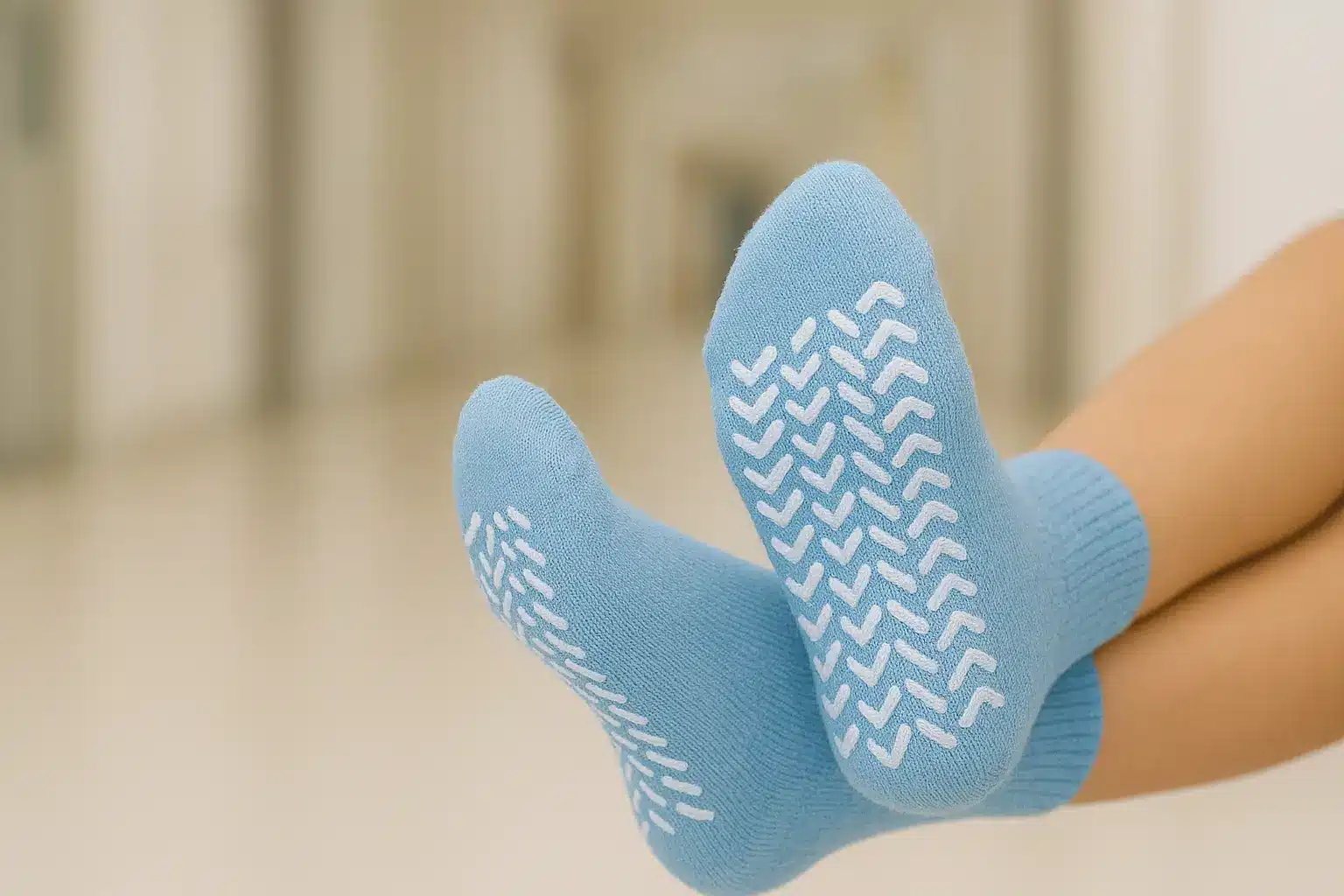
I’ll be honest, I never really thought about hospital socks until my dad spent a week in the hospital last year. One morning, he tried to stand up to use the bathroom. His legs were shaky from the medication, the shiny floor looked harmless, and then his foot slid just enough to scare both of us. I managed to catch him, but the feeling in that moment stayed with me.
That was the day I realized how something as small as a pair of socks can matter so much when someone you love is at their most vulnerable. I started searching for better, safer, and more comfortable options for him. Not the thin ones hospitals hand out, but ones that actually help with traction and comfort.
This guide covers everything I learned while caring for him, and the best hospital socks that truly help patients stay safe and comfortable in 2026.
Affiliate disclosure:This post contains affiliate links. We may earn a commission if you make a purchase, at no extra cost to you.
QUICK ANSWER BOX
Hospital socks are non-slip socks designed to prevent falls on smooth hospital floors. They help elderly patients, people recovering from surgery, and anyone with limited mobility stay safe.
Quick pick: Pembrook Non Skid Hospital Socks because they offer strong traction, are soft, and come in a great multi-pack.
More importantly, patients feel more confident when they don’t slip
WHY HOSPITAL SOCKS MATTER
Here’s the thing. Hospital floors may look clean and harmless, but they are some of the slipperiest surfaces you can walk on. The polished tile, cleaning solutions, and occasional spills all make it harder for patients to stay steady, especially when they are weak or medicated.
Falls are among the most common hospital accidents. Patients walking with IV poles or moving slowly after surgery are already unsteady. Every tiny slide of the foot can be dangerous. I remember watching my dad shuffle forward, taking careful steps, and every slight wobble made my heart jump.
Elderly patients are even more at risk. Age affects balance, reaction speed, and strength. A simple slip can lead to broken bones or long recovery periods.
Patients recovering from surgery often feel dizzy or weak. They may have stitches or pain that affects how they walk. A fall during recovery can set everything back.
Stroke and rehab patients sometimes have only partial mobility, and that makesa solid footing even more important.
Long term care residents walk on hard floors every day, not carpet, which increases the slipping risk.
From my experience, the best hospital socks make a noticeable difference in keeping patients steady on slippery tile floors.
Most hospitals give out basic socks, but they tend to be thin and not very durable. When we switched my dad to a thicker pair with better grip, his steps immediately looked more confident. Honestly, mine did too. I felt more at ease watching him move.
Good hospital socks are inexpensive, easy to pack, and incredibly useful. They protect the people we love when they need it most.
On top of that, proper traction makes a huge difference.
WHAT MAKES GOOD HOSPITAL SOCKS
When you shop for hospital socks, you are not buying something stylish. You are buying safety and comfort. Here is what really matters.
Strong grip on the bottom
Full sole grip patterns offer the best stability. The more coverage, the less slipping.
Easy to put on and take off
Patients with limited movement or swelling need socks that slide on gently. Nurses and caregivers appreciate this too.
Soft and comfortable fabric
Hospital rooms get cold and patients spend a lot of time lying down. Soft, cozy material makes a big difference.
Breathable fabric
Feet can get sweaty in warm rooms. Breathable cotton blends help keep them dry.
Washable and durable
Good hospital socks should survive multiple washes, especially during long stays or home recovery.
Various sizes available
Swelling and bandages are very common in hospitals. Stretchy or wide options matter.
Color options for identification
Some hospitals use yellow socks to indicate fall risk. Having your own pair in the right color helps with consistency.
Good hospital socks should help the patient feel safer, warmer, and more comfortable without squeezing their feet or sliding around.
TOP 7 HOSPITAL SOCKS IN 2026
These are the best hospital socks I’ve personally used or recommended to families who want a safer, more comfortable option.s
Below are the best hospital socks I have personally tested or recommended to other caregivers.
1 . Pembrook Non Skid Hospital Socks (Top Overall Pick)
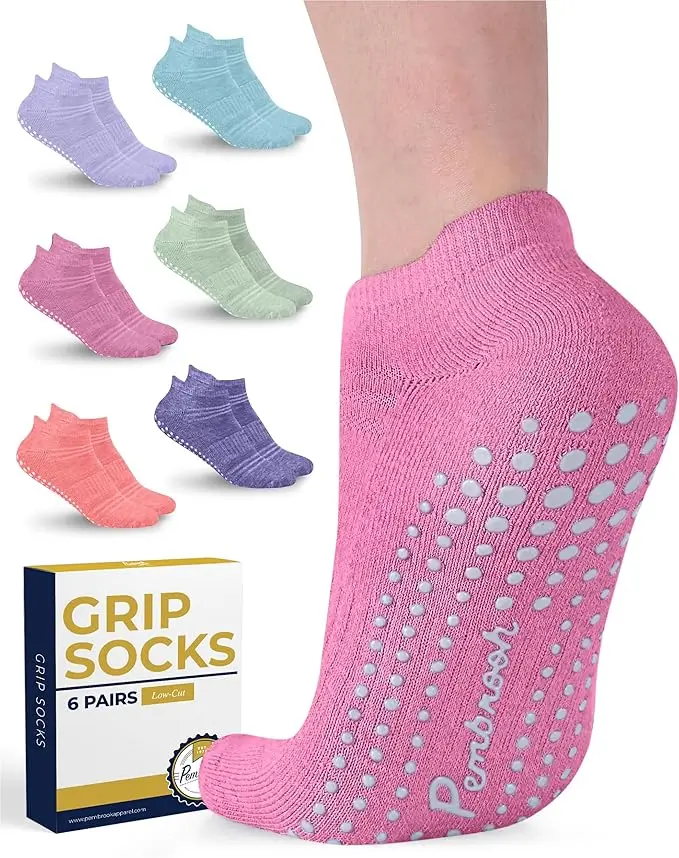
Price: about 12 dollars for 6 pairs
I chose these for my dad during his hospital stay, ay and they quickly became my favorite recommendation. They are soft, stretchy, and the grip is very strong.
Wdo hy they work well
Comfortable fit
Full sole grip
Easy to pull on
Machine washable
Pros
Strong traction
Cozy and warm
Great value
Cons
Not perfect for very swollen feet
Fabric may pill over time
If you’re shopping for the best hospital socks on a budget, this pair offersa solid grip without spending too much.
Best for elderly patients, surgery recovery, and rehab
Personal take: My dad wore these every day and felt safer walking around.
2. Hylaea Non Slip Socks (Most Comfortable)
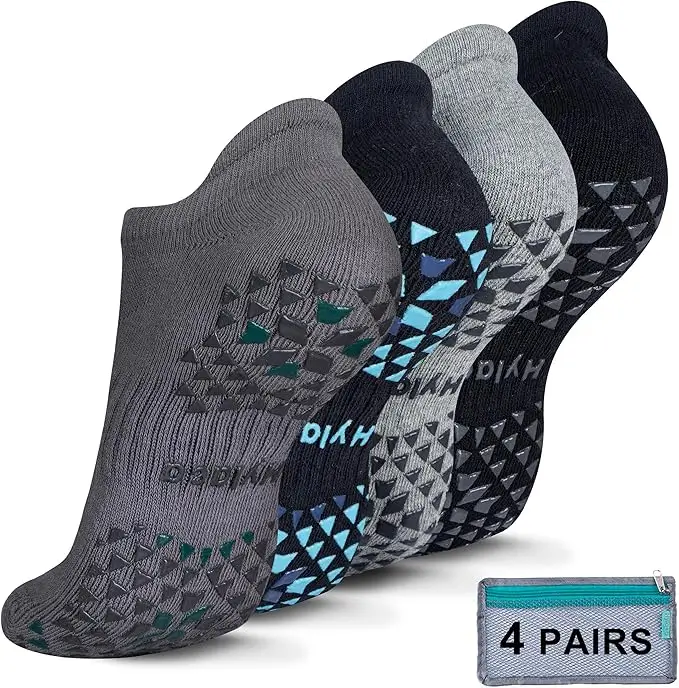
Price: about 24 dollars for 4 pairs
These feel like slipper socks and are perfect for long-term care or home recovery.
Whydo they work well
Thick, cushioned fabric
Warm without overheating
Reliable grip
Pros
Very soft
Great for cold rooms
Multiple sizes available
Cons
Thicker fabric may feel warm to some patients
Grip wears slightly faster with daily washing
Best for seniors, long stays, home recovery
Personal take: My aunt used these after knee surgery and said they made her feel safe and warm.
3. Debra Weitzner Extra Wide Socks
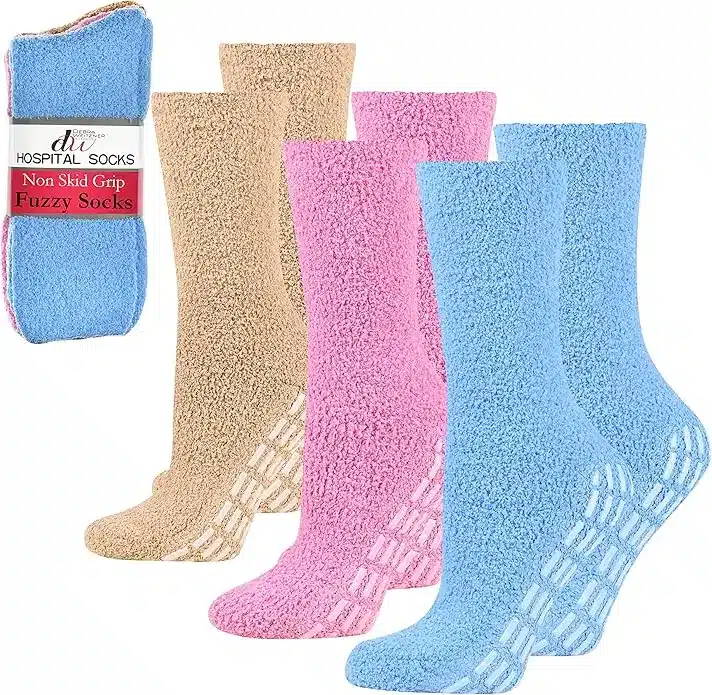
Price: 10 to 14 dollars, 3 Pairs
Ideal for swollen feet, edema, diabetes, or larger patients.
Whydo they work well
Wide, stretchy design
Gentle cuff
Good grip for medical use
Pros
Great for swelling
Breathable
Easy to put on
Cons
More expensive
Thinner sole
Best for bariatric patients, diabetics, and edema
Personal take: After my mom’s surgery, these were the only socks that did not squeeze her feet.
4. Gripperz Medical Socks (Premium Option, Not on Amazon)
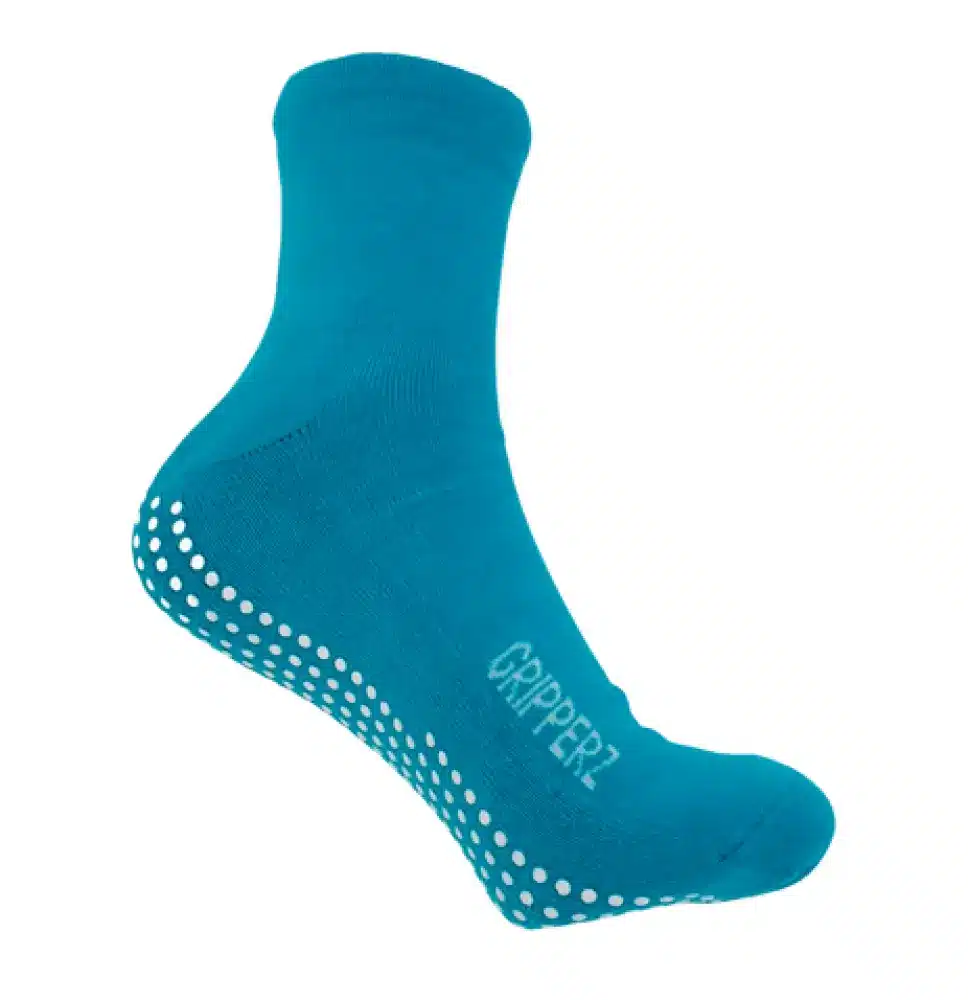
Price: about 14 dollars per pair
Used in many rehab centers because of their durability and grip.
Pros
Very reliable traction
Durable
Moisture wicking
Cons
More expensive
Fewer color choices
Best for rehab, long-term stays
Personal take: They give a very secure, stable feeling when standing up.
5. American Hospital Supply Grippy Sock
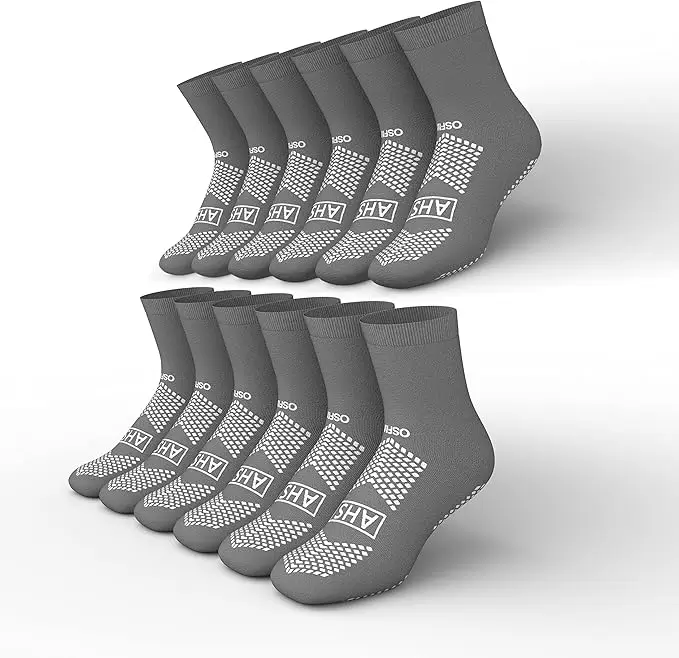
Price: 20 dollarsfor 6 pairs
Extremely comfortable and well-made.
Pros
Soft, high-quality material
Even grip
Stylish
Cons
Expensive
Not for swollen feet
Best for home recovery, younger patients
Personal take: My cousin loved these during her hospital stay.
6 .HCS Non-Slip Hospital Socks
![]HCS Non-Slip Hospital Socks](https://gripsockshub.com/wp-content/uploads/2025/11/8-2-1024x1024.webp)
Price: about 20 dollars for 6 pairs
Affordable, safe, and surprisingly durable.
Pros
Good grip for the price
Light and breathable
Great value
Cons
Thin material
Fit varies
Best for short hospital stays, backup pairs
Personal take: Nurses commented that they looked better than thehospital-issuedd ones.
7. Toulite Hospital Socks
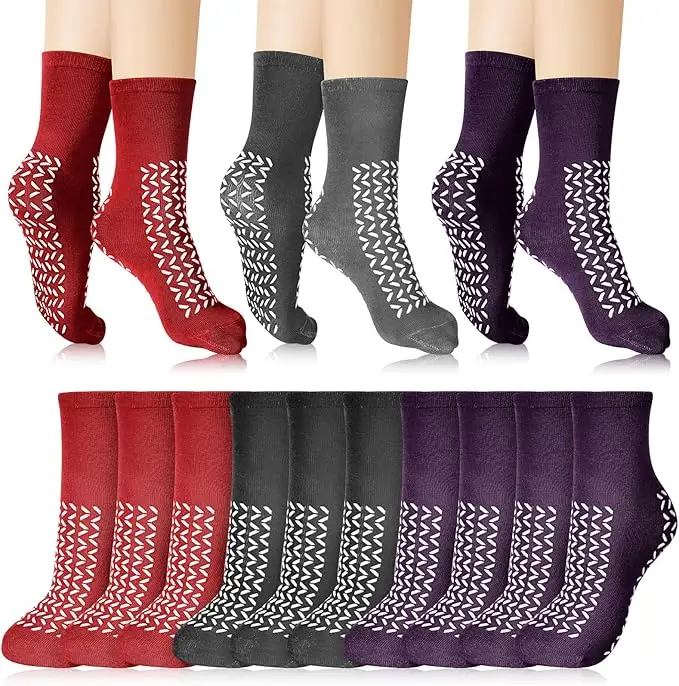
Price: 23 dollars 10 Pairs
Designed specifically for medical fall prevention.
Pros
Very strong grip
Breathable
Comfortable cuff
Cons
Pricey
Grip can feel too sticky for some
Best forthe elderly, rehab, and memory care
Personal take: These made a major difference for someone unsteady on their feet.
FOR SPECIFIC NEEDS
Elderly at home
Falls are one of the biggest risks for seniors. Hospital socks with strong traction help during bathroom trips or walking around on hard floors.
Post surgery
Patients recovering from hip, knee, or abdominal surgery are often dizzy or stiff. Non-slipping socks help them move safely and confidently.
Stroke rehab
Anyone with limited mobility or one-sided weakness needs socks that go on easily and providea strong grip.
Diabetes
Choose socks with non-binding cuffs and very soft material.Long-term
Long term care
Look for washable, breathable, and durable materials. Multi-packs are best.
HOSPITAL VS HOME USE
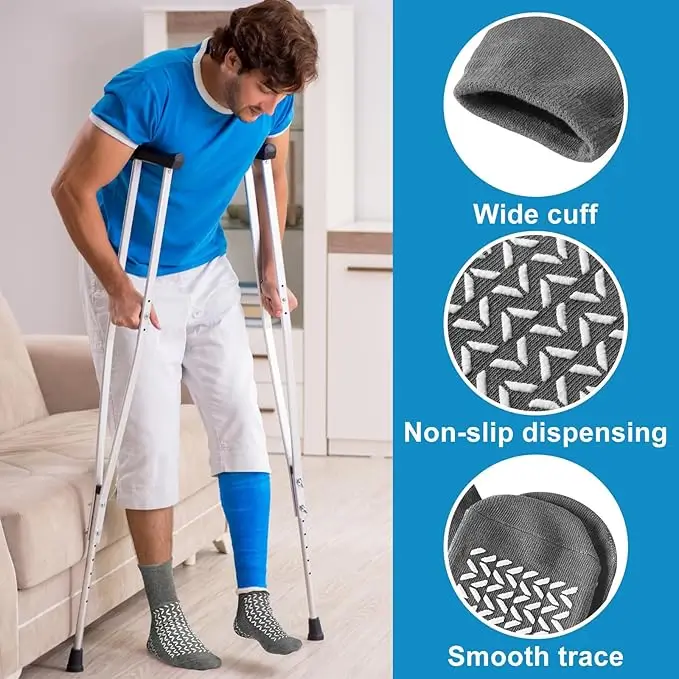
Hospitals usually hand out thin disposable socks. They work for a day or two, but they are not very comfortable,e and the grip wears off quickly.
Bringing your own socks gives patients better traction and warmth. For home recovery, they are even more important because many homes have tile, hardwood, or laminate floors.
Usehospital-style non-slipp socks while walking at night, after showers, during recovery exercises, and anytime fall risk is higher.
They stay useful long after discharge.
Wearing them properly matters too, and if you’re unsure, here’s exactly how to wear grip socks so the grip actually works.s
HOW TO CHOOSE
Look at grip strength first, because better traction means better safety.
Choose soft, breathable materials for sensitive skin.
Make sure the size can handle swelling or bandages.
Pick designs that slide on easily so patients and caregivers do not struggle.
Finally, choose socks that can be washed often without losing grip.
Comfort and safety go hand in hand.
FAQ
Why do hospitals give out socks?
To help reduce falls and identify patients at higher risk.
Are hospital socks goodfor ther elderly at home?
Yes, they are one of the easiest fall prevention tools.
What makes hospital socksnon-slipp?
Rubber or silicone grip patterns on the bottom.
Can you wash and reuse them?
Yes, reusable ones can be washed many times.
What size for swollen feet?
Look for extra-wide or diabetic friendly socks.
Are hospital socks the same as grip socks?
Similar, but hospital socks are made with safety and easy fit in mind.
Do diabetic patients need special socks?
Yes, non-binding cuffs and soft fabrics are best.
Can hospital socks prevent falls?
They reduce slipping but do not replace supervision.
Why do some hospitals use yellow socks?
Yellow often means the patient has a higher fall risk.
Where do I buy good hospital socks?
Amazon, medical supply stores, Gripperz, and similar brands.
CONCLUSION
If you want the safest and most reliable choice, Pembrook Non Skid Hospital Socks are the best option for most patients. They are soft, affordable, and have strong traction.
For tighter budgets or long stays, multi-packs from Toulite are a smart choice.
For patients who need wider or more comfortable fits, Debra, Hylaea, or AHS offer excellent alternatives.
Hospital socks may seem small, but they protect the people we love during a vulnerable time. Whether it is surgery, aging parents, or home recovery, fall prevention should always come first. Safety truly starts witha stable footing.