

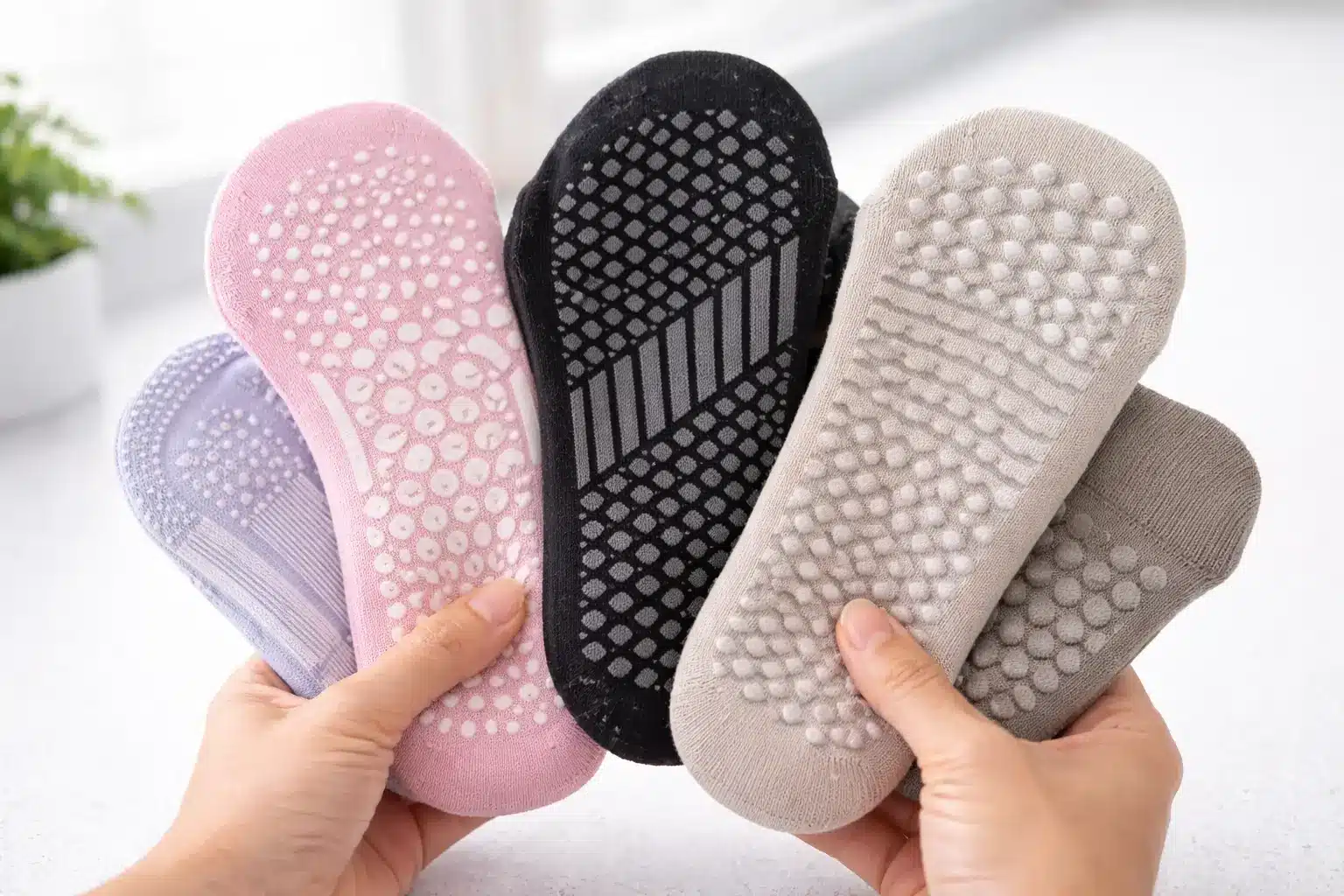
I walked into a sporting goods store last month looking for grip socks. The salesperson asked what I needed them for, and I said, “Just grip socks.” She stared at me like I’d asked for “just shoes” without mentioning if I was running a marathon or attending a wedding.
Turns out, buying grip socks isn’t as simple as grabbing any pair with rubber dots on the bottom. The grip socks you need for hot yoga are completely different from what you’d wear playing football or recovering in a hospital. I learned this the hard way after buying cute Pilates socks that were useless on the basketball court.
That’s when I realized most people need a grip socks buying guide that actually explains the differences. Because choosing the wrong type means wasting money on socks that won’t work for your specific activity. Let me walk you through exactly how to choose grip socks that’ll actually serve your purpose.
The Quick Answer: How to Choose Grip Socks
To choose grip socks effectively, first identify your primary activity (Pilates, yoga, football, hospital use, or general non-slip needs). Then match three key factors: grip pattern (full coverage vs targeted dots), material (cotton blend vs performance synthetic), and compression level (none, light, or medical grade). Your activity determines which combination works best for your specific needs.
The biggest mistake people make is thinking all grip socks are the same. They’re not. A ballerina needs completely different traction than a football player, and hospital patients need features that yoga enthusiasts don’t require.
Additionally, price doesn’t always indicate quality. I’ve tested 15-dollar grip socks that outperformed 40-dollar pairs because they matched my specific use case better. The key is understanding what features matter for your situation.
Why Your Grip Socks Buying Guide Actually Matters
Here’s something most people don’t consider until it’s too late. Buying the wrong grip socks isn’t just wasteful; it’s potentially dangerous.
I’ve seen people slip during yoga because their “grip socks” had inadequate traction for sweaty conditions. Meanwhile, football players wearing hospital grip socks couldn’t make quick cuts because the grip pattern wasn’t designed for athletic movements. One woman told me she bought expensive Pilates grip socks for her hospital stay, only to find they didn’t meet hospital safety requirements.
The grip socks market exploded over the past five years. You can now find hundreds of options online, each claiming to be the best. However, without a proper grip socks buying guide, you’re essentially guessing based on pretty colors and customer reviews from people doing completely different activities than you.
That’s why understanding the decision framework matters. Once you know what to look for, you can choose grip socks in five minutes instead of spending hours reading contradictory reviews. Additionally, you’ll save money by buying the right pair the first time instead of accumulating a drawer full of socks that don’t work.

Understanding the 5 Types of Grip Socks (Complete Breakdown)
Before you can use a grip sock buying guide effectively, you need to understand that grip socks fall into five distinct categories. Each type is engineered for specific conditions and activities.
Type 1: Pilates and Barre Grip Socks
These are designed for studio floors and controlled movements. The grip pattern typically covers the entire sole and sometimes extends up the sides for extra stability during poses. Most Pilates grip socks use a dot or stripe pattern made from PVC or silicone.
The material is usually aotton or a cotton blend because studios are climate-controlled. You don’t need moisture-wicking here. Instead, you need comfort and just enough grip to prevent sliding during holds without so much traction that you can’t pivot or adjust positions smoothly.
Additionally, Pilates grip socks often feature open toes or toeless designs. This gives you a better floor feel and helps with balance. The aesthetic matters too because studio culture tends to emphasize cute, coordinated workout wear. That’s why you’ll find these in fun colors and patterns.
If you’re choosing grip socks for Pilates or barre, prioritize comfort, moderate grip coverage, and look for options that won’t trap heat during hour-long classes. Check out our detailed guide on cute Pilates grip socks for specific brand recommendations.
Type 2: Yoga Grip Socks
Yoga grip socks look similar to Pilates socks but have crucial differences. They need a more aggressive grip because yoga involves sweat, especially in hot yoga classes. The grip pattern is usually denser and made from stickier materials.
Most yoga grip socks use either full sole coverage or strategically placed grips at pressure points (ball of foot, heel, and sometimes under toes). The material needs moisture-wicking properties because your feet will sweat during intense flows.
However, yoga grip socks need flexibility. You’re moving through poses that require your feet to spread, point, and flex constantly. Socks that are too structured or thick interfere with these movements. That’s why yoga-specific grip socks tend to be thinner and stretchier than other types.
For yoga practice, your grip socks buying guide should emphasize breathability, flexibility, and grip that works when wet. Our comprehensive best grip socks for yoga article covers the top options tested in actual hot yoga conditions.
Type 3: Football and Athletic Grip Socks
Now we’re talking serious performance gear. Football grip socks (and other team sport grip socks) are engineered completely differently from studio socks. These need to work inside athletic shoes, not on studio floors.
The grip pattern targets specific zones: arch support, heel cup, and sometimes the entire footbed. This internal grip prevents your foot from sliding inside your shoe during quick direction changes, sprints, and jumps. The grip material is usually a rubberized pattern that grips against sock and shoe materials.
Athletic grip socks are typically knee-high or crew length because football players wear them under their team socks. The material is almost always synthetic (polyester, nylon, or specialized performance blends) with serious moisture-wicking capabilities. You’re going to sweat heavily, and wet socks mean blisters.
Compression is common in athletic grip socks. Light to moderate compression reduces muscle fatigue and improves blood flow during intense activity. The socks are also more durable because they need to survive repeated washing and rough use.
When using this grip socks buying guide for sports, focus on moisture management, targeted grip zones, durability, and proper length for your sport. Our best grip socks for football guide includes tested recommendations from actual players.
Type 4: Hospital and Medical Grip Socks
Hospital grip socks serve a completely different purpose: fall prevention. These are not fashion items or performance gear. They’re medical safety equipment that happens to look like socks.
The grip pattern on hospital socks is almost always on both the top and bottom of the foot. This dual-sided grip ensures traction whether you’re shuffling forward or if your foot twists slightly. The pattern is typically raised treads rather than smooth dots.
Hospital grip socks come in specific colors (usually beige, white, or yellow) that identify them as medical safety gear to healthcare staff. They’re designed to fit loosely over bandages, swelling, or medical devices. The opening is wider, and the elastic is gentler thanthat of regular socks.
Material is basic cotton or cotton blend. Nobody cares about moisture-wicking in a hospital sock. What matters is that it’s easy to put on, stays on securely without being tight, and provides reliable traction on tile and linoleum floors.
For hospital use, your grip socks buying guide should prioritize dual-sided grip, easy on and off, loose fit, and compliance with medical facility requirements. Our best hospital socks article explains what different facilities require.
Type 5: Everyday Non-Slip Socks
These are the catch-all category for people who want grip socks for general home use, elderly care, or everyday wear on slippery floors. Think hardwood floors, tile bathrooms, or anywhere you need a little extra traction.
Every day, non-slip socks usually have a simpler grip pattern than specialized types. Small dots or treads on the sole provide enough traction for normal walking without feeling bulky or restrictive. The grip coverage doesn’t need to be as aggressive because you’re not doing athletic moves or medical activities.
Comfort is the priority here. These socks are often worn for hours at home, so they need to feel like regular socks. Cotton or cotton blend materials work well. The fit should be relaxed,d and the elastic shouldn’t bind.
Aesthetically, everyday grip socks range from basic to fun, depending on the brand. You’ll find everything from plain colors to patterns to holiday themes. Because these aren’t for specific activities, personal preference drives the choice.
When choosing everyday grip socks, your buying guide should emphasize comfort, adequate (not excessive) grip, durability for frequent washing, and fit that works for extended wear. Check our best non-slip socks guide for top household options.
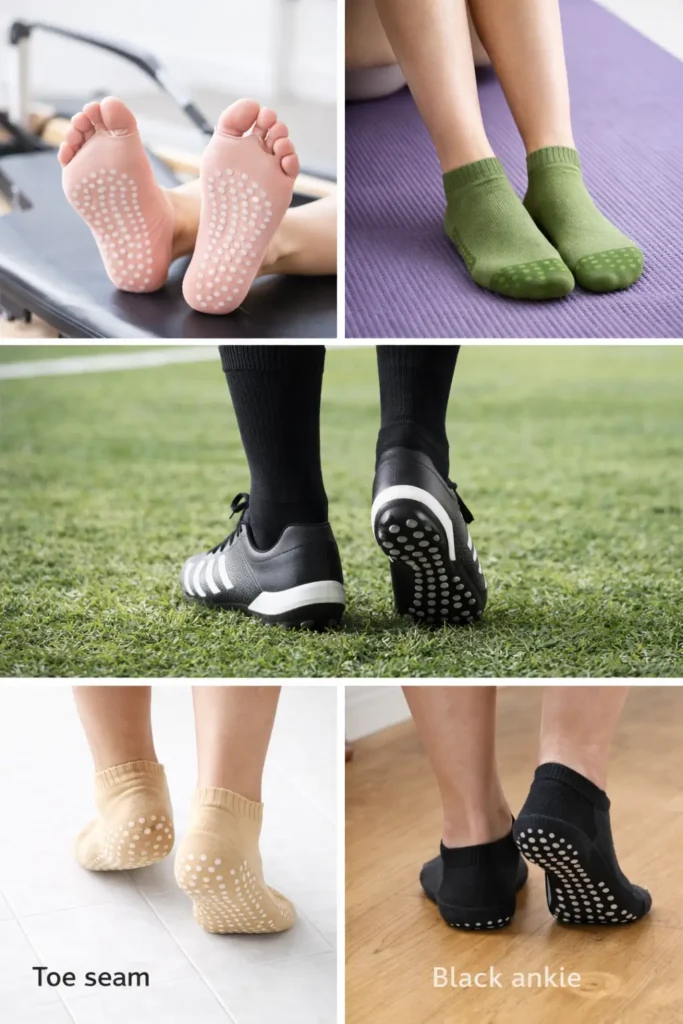
Grip Socks Comparison: Which Type Is Right for You?
Here’s a visual breakdown to help you quickly identify which type matches your needs:
| Sock Type | Best For | Grip Location | Material Type | Price Range | Key Feature |
|---|---|---|---|---|---|
| Pilates/Barre | Studio floors, controlled movement | Full sole, sometimes sides | Cotton blend | 12 to 25 dollars | Open toe design, cute patterns |
| Yoga | Mat work, hot yoga | Full sole or strategic points | Moisture wicking cotton | 15 to 30 dollars | Flexible, works when sweaty |
| Football/Athletic | Inside shoes, team sports | Footbed zones, heel, arch | Performance synthetic | 15 to 35 dollars | Compression, durability |
| Hospital/Medical | Fall prevention, patient safety | Top AND bottom of foot | Basic cotton | 8 to 15 dollars | Dual sided grip, loose fit |
| Everyday/Home | General household use | Bottom sole only | Comfortable cotton | 10 to 20 dollars | All day comfort, simple design |
The Complete Grip Socks Buying Guide: 7 Step Decision Framework
Now, let’s walk through exactly how to choose grip socks using a systematic approach. This framework works whether you’re buying for yourself or someone else.
Step 1: Identify Your Primary Activity
This is the foundation of your entire decision. You cannot choose grip socks effectively without knowing exactly what you’ll be doing in them.
Ask yourself: Where will I wear these socks? Am I moving on a studio floor, yoga mat, inside athletic shoes, around a hospital, or just walking on home floors? Will I be sweating heavily or staying relatively dry? Is this for intense athletic performance or casual everyday use?
Your activity determines everything else. A single person might need multiple types of grip socks for different activities. That’s completely normal. Don’t try to find one pair that does everything because you’ll end up with socks that do nothing particularly well.
Step 2: Determine Required Grip Pattern
Once you know your activity, match it to the right grip pattern using this guide.
For studio floor activities (Pilates, barre, dance), you need full sole coverage or extensive dot patterns. The grip should be moderate, enough to prevent sliding but not so aggressive that pivoting feels sticky.
For mat-based yoga, especially hot yoga, you need either full coverage or strategic placement at the ball of the foot, heel, and under the toes. The grip needs to work when wet, so look for silicone or sticky rubber materials.
For athletic use inside shoes, you need targeted grip zones on the footbed. Full sole grip works, but zoned grip at the arch, heel, and forefoot is more effective. The pattern should grip fabric and shoe insoles, not just floors.
For medical and hospital use, you must have dual sided grip (top and bottom). This is non-negotiable for safety. The pattern should be raised treads rather than smooth dots.
For everyday home use, simple sole grips are fine. Small dots or basic treads provide enough traction for normal walking on slippery surfaces without feeling bulky.
Step 3: Choose the Right Material
Material selection directly impacts comfort, durability, and performance. Here’s how to match material to your needs.
Cotton or cotton blends work for low-sweat activities (Pilates, barre, hospital, home use). They’re comfortable, breathable for normal conditions, and affordable. However, cotton retains moisture, so avoid it for intense sweating.
Performance synthetics (polyester, nylon, specialized blends) are essential for athletic use and hot yoga. These materials wick moisture away from skin, dry quickly, and maintain their shape through repeated washing. They cost more but last longer under demanding conditions.
Bamboo blends offer a middle ground. They’re softer than synthetics but wick moisture better than cotton. Good for yoga and moderate intensity activities. However, they’re pricier and slightly less durable than full synthetics.
Your grip sock buying guide should match the material to the sweat level. Light activity equals cotton. Heavy sweat equals synthetic. Moderate activity could go either way based on personal preference.
Step 4: Consider Compression Level
Not all grip socks include compression, but it’s an important factor for certain uses.
No compression is fine for studio workouts, hospital use, and everyday wear. The socks fit normally without squeezing your legs. This is the most comfortable option for activities where circulation support isn’t needed.
Light compression (8 to 15 mmHg) helps with minor swelling and provides gentle support. Good for people who stand a lot, have mild circulation concerns, or want a snugger fit during workouts. Athletes often prefer light compression for reduced muscle fatigue.
Medical-grade compression (15 to 30 mmHg) requires careful consideration. You might need this if you have circulation issues, varicose veins, or specific medical needs. However, always consult a doctor before using medical compression during athletic activities. Learn more in our comprehensive how compression socks work guide.
For most people, choosing grip socks, no compression, or light compression works perfectly. Don’t pay extra for medical-grade compression unless you specifically need it for health reasons.
Step 5: Check Length and Coverage Options
Grip socks come in different lengths, and choosing the right one affects both function and comfort.
Ankle or low-cut grip socks work for most studio activities, yoga, and home use. They’re comfortable, don’t trap heat, and allow good air circulation. However, they don’t provide any calf support or compression.
Crew length grip socks cover your calf partially. Good for people who want a little more warmth or coverage. These work well for colder studios or if you prefer more sock than less.
Knee-high grip socks are primarily for athletic use. Football players wear these under team socks. Some people also choose knee-high boots for medical compression needs, combined with grip. These traps generate more heat, so only choose this length if your activity specifically requires it.
Toeless or open-toe grip socks expose your toes. Popular for Pilates, barre, and yoga because they improve balance and floor feel. The exposed toes also help with temperature regulation. However, they offer no toe protection if that matters for your activity.
Your grip sock buying guide should match the length to both your activity and personal comfort preferences. When in doubt, ankle length works for most non-athletic uses.
Step 6: Assess Fit and Sizing
Proper fit is crucial for grip socks to work correctly. Too loose and they’ll slip around inside shoes or bunch under your feet. Too tight and they’ll cut off circulation or feel uncomfortable.
Most grip sock brands use standard shoe sizing. However, this varies significantly between brands. Always check the specific brand’s sizing chart rather than assuming your shoe size automatically translates.
For studio and home grip socks, fit should be snug but not tight. You should be able to wiggle your toes comfortably. The heel should sit properly in the heel cup without excess fabric bunching.
For athletic grip socks worn inside shoes, the fit needs to be quite snug. These socks shouldn’t move independently of your foot at all. Some athletes even size down slightly for the tightest possible fit.
For hospital grip socks, the fit should be loose enough to accommodate swelling, bandages, or medical devices. These are intentionally sized generously because comfort and ease of use matter more than a precise fit.
If you’re between sizes, size up for comfort activities (Pilates, yoga, home) and size down for athletic use. Your grip sock buying guide priorities shift based on whether you value comfort or performance more.
Step 7: Consider Special Features and Quality Indicators
Before finalizing your grip sock choice, check for these quality indicators and special features.
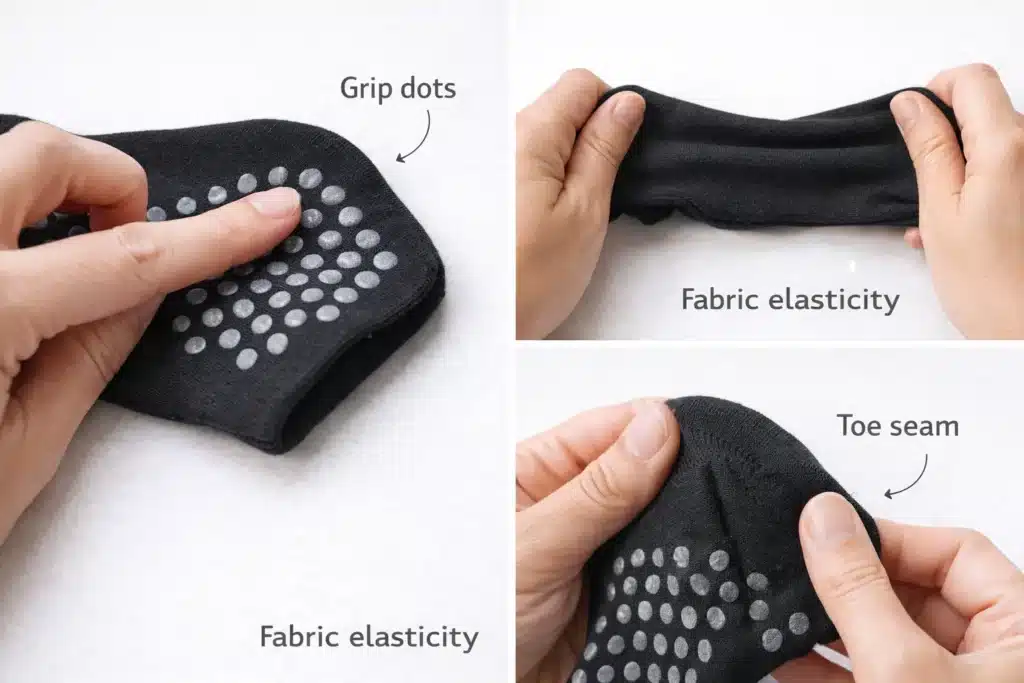
Grip material quality: Press the grip dots or treads with your thumb. They should feel slightly tacky but not sticky. Cheap grip materials feel hard and plasticky. Quality grips feel flexible and grippy. Additionally, check that the grip is securely attached to the sock fabric, not just heat-pressed on the surface.
Reinforced areas: Look for reheat-pressed and heels. These high-wear areas should have extra stitching or thicker material. Socks without reinforcement wear out quickly in these spots.
Arch support: Some grip socks include compression arch bands. This feature helps with foot fatigue during long activities. However, if the arch band is too tight, it can be uncomfortable. Try before you buy if possible.
Moisture wicking claims: If a sock claims moisture wicking, check the material content. It should be primarily synthetic fibers (polyester, nylon, etc.). Cotton cannot wick moisture regardless of marketing claims.
Seam placement: Toes seams should be flat or positioned so they won’t rub during activity. Bulky toe seams cause blisters. Quality grip socks use flat lock seams or seamless toe construction.
Washing instructions: Check if the socks are machine washable and dryable. Some grip materials break down in high heat. Air drying extends lifespan but is less convenient. Factor this into your decision.

Common Mistakes People Make When Choosing Grip Socks
After helping dozens of people find the right grip socks, I’ve seen the same mistakes repeatedly. Let me save you from these common pitfalls.
Mistake #1: Choosing Based on Looks Instead of Function
Those Instagram-worthy grip socks with cute patterns and fun colors look amazing. However, if they don’t match your activity needs, they’re useless.
I bought gorgeous pastel Pilates socks once because they matched my workout outfit. They had a terrible grip for hot yoga, which is what I actually needed them for. Meanwhile, I passed on plain black performance socks that would have worked perfectly because they weren’t as pretty.
Function first, aesthetics second. If you find grip socks that are both functional and cute, great. But never sacrifice performance for appearance. Your grip sock buying guide should always prioritize activity requirements over visual appeal.
Mistake #2: Assuming All Grip Patterns Work the Same
Not all grip is created equal. Small, widely spaced dots provide minimal traction. Large, densely packed treads provide maximum grip. The pattern design affects how well socks work for specific activities.
Additionally, grip placement matters as much as grip amount. Full sole coverage works for floor activities, but can feel weird inside shoes. Targeted grip zones excel for athletic use but provide inadequate coverage for studio floors.
Match the grip pattern specifically to your activity. Don’t assume any grip sock will work for any situation.
Mistake #3: Buying the Wrong Material for Your Activity Level
This is huge. Cotton grip socks are comfortable and affordable, which makes them popular. However, cotton becomes slippery when wet. If you sweat heavily during your activity, cotton grip socks will actually make you slip more, not less.
I learned this during an intense HIIT class. My cute cotton grip socks became skating rinks on my feet once I started sweating. Performance synthetic grip socks in the same situation maintained their grip throughout the workout.
Your grip sock buying guide should match the material to your expected sweat level. When in doubt about how much you’ll sweat, choose synthetic materials. They work for both light and heavy perspiration.
Mistake #4: Ignoring Compression When You Actually Need It
Many people avoid compression grip socks because they assume compression is uncomfortable or only for elderly people. That’s wrong on both counts.
Light compression (8 to 15 mmHg) in grip socks reduces muscle fatigue, improves recovery, and provides a better fit for athletic activities. Unless you have circulation problems that contraindicate compression, there’s no reason to avoid it.
However, the reverse mistake also happens. Some people buy medical-grade compression grip socks when they only need light compression or no compression at all. High compression can be uncomfortable during activities if you don’t actually need it medically.
Your grip socks buying guide should recommend compression based on your actual needs, not assumptions. For athletic use, light compression helps. For studio workouts, skip it unless you have specific reasons to include it.
Mistake #5: Buying Cheap Multipacks Without Testing First
Those 5 pair packs for 20 dollars seem like a great deal. Sometimes they are. Often, they’re a waste of money because the socks don’t actually work well.
I’ve tested cheap grip socks where the grips peeled off after two washes. Others had sucha poor grip that they provided almost no traction. Some fit so badly that they slipped around during use.
Start with one quality pair from a reputable brand that matches your specific needs. Test them thoroughly. If they work perfectly, then buy more of the same. Don’t invest in quantity before confirming quality.
Your grip socks buying guide should emphasize quality testing before bulk buying. One pair of 20-dollar socks that works beats five pairs of 4-dollar socks that don’t.
Mistake #6: Not Reading Reviews From People Doing Your Specific Activity
Amazon reviews are tricky for grip socks. Someone giving 5 stars might use them for completely different activities than you. Their “perfect” grip socks could be terrible for your needs.
When reading reviews, filter for people doing your specific activity. If you need football grip socks, ignore reviews from Pilates practitioners. If you’re buying for yoga, skip the hospital patient reviews.
Additionally, look for reviews that mention specific features you care about: grip quality when sweating, durability after multiple washes, fit inside specific shoe brands, or comfort during long sessions.
Your Grip Socks Shopping Strategy: Step-by-Step Action Plan
Now that you understand the decision framework, here’s exactly how to approach buying grip socks.
For First-Time Buyers
Start by clearly defining your primary use case. Write it down: “I need grip socks for hot yoga classes,” or “I need football grip socks for training,” or “I need hospital grip socks for recovery.” This clarity prevents impulse buying.
Next, use your grip socks buying guide to identify which of the five types matches your needs. Don’t skip this step by assuming all grip socks work for all purposes.
Research three to five brands that specialize in your sock type. Brand specialization matters. Companies that focus on athletic grip socks understand athletes’ needs better than companies making general purpose socks. Check out our detailed reviews of Tavi grip socks and other specialized brands.
Read reviews specifically from people doing your activity. Look for mentions of the features you prioritized in steps 1 through 7 of the decision framework.
Buy one pair from your top choice brand. Test them thoroughly during multiple sessions. Pay attention to grip performance, comfort, durability, and whether they actually solve your traction needs.
If that first pair works great, buy two more from the same brand. If something’s not quite right, try a different brand using the same decision framework. Don’t bulk buy until you’ve confirmed the socks work for you.
For Experienced Buyers Upgrading or Replacing
You already know what works and what doesn’t. Use this opportunity to optimize rather than just replace what you had.
Consider whether your needs have changed. Are you training harder? Sweating more? Doing different activities? Your grip socks buying guide should reflect your current situation, not past needs.
Look at new materials and technologies. Grip sock innovation has improved significantly. Brands now offer better moisture-wicking, more durable grips, and smarter design features than even two years ago.
Don’t automatically rebuy the same brand. If your old socks worked okay but had minor issues (slipped slightly, wore out fast, or didn’t breathe well), look for options that specifically address those problems.
Check if your current grip socks have worn-out grips, lost elasticity, or developed any issues. worn-outyou need replacements now. If they’re still functional, you can take time researching upgrades.
For Gift Buyers
Buying grip socks as a gift requires extra care because you’re making decisions for someone else’s needs.
First, find out specifically what activities the recipient does. Don’t guess. If they do Pilates, don’t buy them football grip socks just because they’re “athletic.”
Check if they have size or fit preferences. Some people hate compression. Others can’t stand toeless socks. Ask directly or observe what they currently wear.
Consider buying a slightly higher quality option than they might buy themselves. Grip socks make great gifts when they’re nicer versions of something the person actually needs.
Include a gift receipt. Fit and personal preference matter a lot with grip socks. The recipient should be able to exchange for a different size or style if needed.
Alternatively, consider a gift card to a specialty sock retailer with a note explaining you wanted them to choose their perfect grip socks using a buying guide. This respects their specific needs while still being thoughtful.
Budget Considerations
Quality grip socks range from 10 to 35 dollars per pair. Here’s how to think about that investment.
For activities you do weekly, invest in quality. If you attend three Pilates classes every week, spending 25 dollars on grip socks that last six months costs you about 1 dollar per class. That’s worth it for safety and comfort.
For occasional use, mid-range options work fine. If you only do yoga once or twice a month, you don’t need premium 35 dollar socks. A solid 15 to 20 dollar pair will serve you well.
For testing new activities, start cheap but not the bottom tier. If you’re trying Pilates for the first time, don’t invest in expensive socks until you know you’ll continue. However, don’t buy 5 dollar socks that might turn you off the activity because they don’t work properly.
For medical needs, follow medical advice regardless of cost. If your doctor recommends specific grip socks for safety, that’s not where you cut corners.
Remember that grip socks are consumable items. They wear out with use and washing. Budget for replacement every three to six months, depending on use frequency.
Special Considerations for Different User Groups
Your grip socks buying guide needs might vary based on specific circumstances. Here’s how different groups should approach the decision.
For Athletes and Serious Fitness Enthusiasts
Performance matters more than comfort for you. Choose synthetic materials exclusively. Your sweat output demands moisture-wicking that only synthetics provide effectively.
Consider light compression even if you don’t think you need it. The performance benefits (reduced fatigue, better fit, improved recovery) are worth the slight increase in cost and learning curve for getting them on.
Buy multiple pairs immediately once you find ones that work. You’re training frequently and need clean grip socks for every session. Having only one pair means either washing constantly or going without.
Prioritize durability. Read reviews mentioning how socks hold up after 20-plus washes. Athletic grip socks that fall apart after a month aren’t worth any price.
Check sport-specific features. Football players need different grip patterns than basketball players. Yogis need different materials than CrossFit athletes. Don’t settle for generic athletic socks.
For Beginners and Casual Users
Comfort matters more than performance for you. Cotton or cotton-blend grip socks work fine for moderate activity levels. You’re not sweating enough to need high-tech materials.
Don’t overthink the decision. Choose high-techle mid range brand, buy one pair, and see how it goes. You can always upgrade later if you get more serious about your activity.
Focus on proper fit over special features. Beginners benefit most from socks that feel comfortable and stay put. Advanced features like arch support or compression zones matter less until you’re training harder.
Buy affordable options but avoid the absolute cheapest. That 5-dollar pair will probably disappoint. The 12 to 18 dollar range offers good quality at beginner-friendly prices.
Remember that your needs might change. If you love your new activity and increase frequency, you’ll want to revisit your grip socks buying guide in a few months with your updated needs.
For Elderly Users or Caregivers
Safety is the absolute priority. The grip pattern should be on both the top and bottom of the sock. This prevents falls, whether the person is walking forward or their foot turns.
Choose loose-fitting socks with gentle elastic. Elderly feet often have swelling, circulation issues, or pressure sensitivity. Tight socks can be uncomfortable or even harmful.
Prioritize easy on and easy off. Elderly users or their caregivers need to put these socks on without struggle. Look for socks with wider openings and stretchy materials that don’t require yanking or forcing.
Consider color coding. Hospital-style yellow or beige grip socks are immediately identifiable as safety equipment. This helps caregivers and family members remember when the person is wearing protection.
Buy multiple pairs. Elderly users might need grip socks throughout the day. Having several pairs means always having clean ones available without emergency washing.
For elderly users with specific medical conditions like diabetes, consult with their doctor before buying. Some foot conditions require special sock considerations. Check our guide on the best diabetic socks for women for specialized recommendations.
For Hospital Patients and Post-Surgery Recovery
Follow your medical facility’s requirements. Some hospitals only allow specific colors or styles. Call ahead and ask before buying.
Buy dual-sided grip socks, not regular grip socks. Hospital floors require traction, whether you’re walking normally or shuffling carefully.
Choose larger sizes if there’s any swelling or bandaging. Post surgery feet often swell. Socks that fit normally might become uncomfortably tight.
Prioritize basic cotton materials over fancy features. You needa simple, functional, safe grip. This isn’t the time for performance synthetics or compression unless medically prescribed.
Buy several pairs. Hospital stays and recovery periods are unpredictable. Having extras means not stressing about laundry during an already stressful time.
Taking Action: Your Next Steps
You’ve read through this complete grip socks buying guide. Now it’s time to actually choose and buy the right pair for your needs.
Immediate Action Items
First, clearly identify your primary use case. Write it down: I need grip socks for (specific activity). Be as precise as possible.
Second, review the five types of grip socks and determine which category matches your needs. Don’t try to make one type work for a different purpose.
Third, use the seven-step decision framework to narrow your options. Go through each step systematically rather than jumping around.
Fourth, research three specific brands that specialize in your sock type. Read reviews from people doing your exact activity.
Fifth, buy one pair from your top choice. Test them thoroughly in real conditions. Evaluate grip, comfort, fit, and durability.
If Your First Choice Works Perfectly
Buy two more pairs of the same socks. Having three pairs in rotation means you always have clean ones available.
Leave a helpful review mentioning your specific use case and what worked well. Help future buyers using their grip socks buying guide.
Set a calendar reminder for three months out. Check your socks for wear at that point. Replace them if the grip is degrading orthe fit is loosening.
Consider trying a similar model from the same brand if you do multiple activities. Brands that make great Pilates socks often excel at yoga socks too.
If Your First Choice Doesn’t Work
Identify specifically what didn’t work. Was it the grip pattern, material, fit, or something else? This helps you choose better next time.
Revisit the relevant step in your grip socks buying guide decision framework. If grip was the problem, you focused on the wrong grip pattern for your activity. If comfort were the issue, material choice needs adjustment.
Try a different brand of dressing for your specific concern. If durability were the problem, choose a brand known for lasting quality. If moisture was the issue, switch to better synthetic materials.
Don’t give up after one attempt. Finding the perfect grip socks sometimes takes trying two or three options. The right pair is worth the search.
Long Term Maintenance
Wash your grip socks after every use. Body oils and sweat degrade grip materials over time. Clean socks last longer and work better.
Air dry when possible. Heat breaks down grip materials faster. If you must machine dry, use low heat.
Inspect the grip regularly. When dots start peeling, or treads wear smooth, it’s replacement time. A worn grip is ineffective and potentially dangerous.
Rotate multiple pairs. Using the same socks every session wears them out faster. Rotation extends the overall lifespan.
Replace every three to six months, depending on use frequency. Weekly use means replacement every three months. Monthly use can stretch to six months. Don’t push beyond that,t even if they look okay.
Final Thoughts on Choosing Grip Socks
This grip socks buying guide gave you a complete framework for making smart purchasing decisions. The key takeaway is that different activities absolutely require different grip socks. There is no universal best grip sock, only the best grip sock for your specific needs.
Take the time to work through the decision framework. Identify your activity, match grip pattern, choose appropriate material, consider compression, select proper length, assess sizing, and check quality indicators. These seven steps ensure you choose grip socks that actually work instead of accumulating a drawer full of disappointments.
Remember that price doesn’t equal quality in the grip sock world. A 15-dollar pair perfectly matched to your needs outperforms a 35-dollar pair designed for different activities. Smart bu35-dollars expensive buying every time.
If you found this grip socks buying guide helpful, check out our other comprehensive guides on best grip socks, best ankle socks, best crew socks, and best moisture-wicking socks for more specific recommendations and reviews.
Meanwhile, pay attention to how your grip socks perform in real conditions. Your experience will teach you what matters most for your specific situation. Use that knowledge to refine your choices as you replace socks over time.
Have questions about choosing grip socks for your specific activity? Drop them in the comments, and I’ll help you work through the decision framework. Your safety and performance deserve grip socks that actually work for your needs.