


I walked into the nurse’s station on my first 12-hour shift wearing regular athletic socks because nobody told me I’d need compression socks for nursing. By hour eight, my legs felt like concrete pillars. My ankles had swollen so much that I could barely get my shoes off when I finally got home. An older nurse saw me struggling and said simply, “Honey, you need compression socks. Tomorrow.”
She was absolutely right. The next shift, wearing proper compression socks for nurses, felt completely different. My legs stayed comfortable, the swelling never appeared, and I had energy left at the end of my shift instead of feeling like I’d been hit by a truck.
That was five years ago, and I haven’t worked a single shift without compression since. However, not all compression socks work equally well for the unique demands of nursing. Hospital floors, 12-hour shifts, constant movement, and the need for comfort under scrubs require specific features that regular compression socks often lack.
Let me share everything I’ve learned about finding the best compression socks for nurses, including which features actually matter, what compression level works best, and the specific pairs that survive the brutal reality of nursing shifts.
The Quick Answer: Best Compression Socks for Nurses
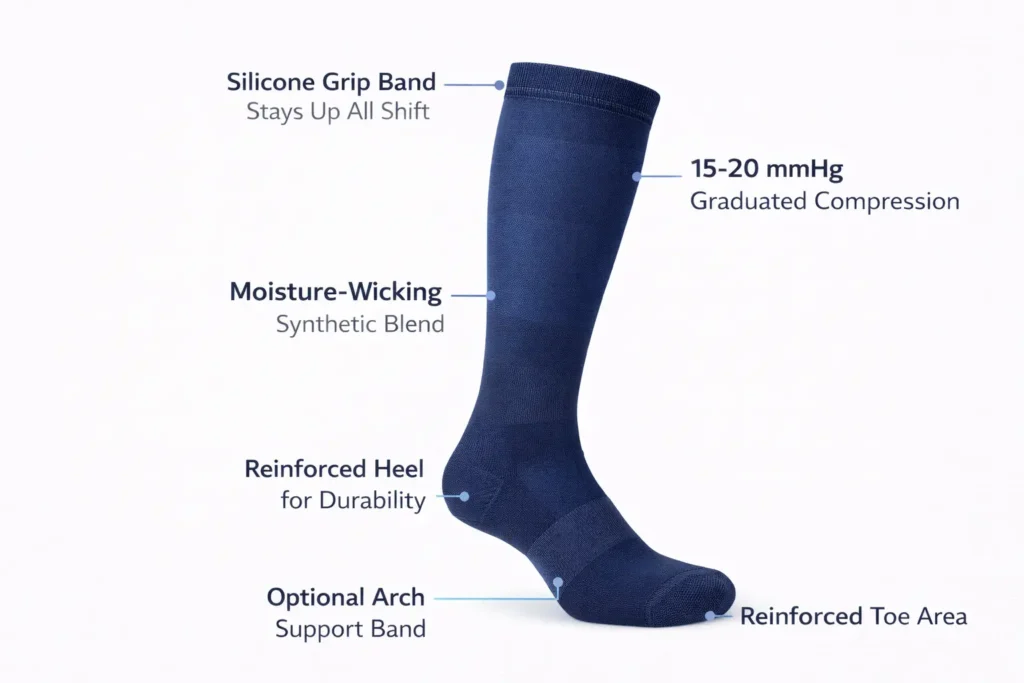
The best compression socks for nurses provide 15 to 20 mmHg graduated compression, stay up during 12-hour shifts without rolling or slipping, fit comfortably under scrubs without bunching, feature moisture-wicking materials to handle sweat during busy shifts, and have reinforced heels and toes for durability. Nurses need compression that prevents the significant leg swelling and fatigue that develops from prolonged standing and walking on hard hospital floors, while remaining comfortable enough for daily wear without causing circulation issues.
The sweet spot for nursing compression is moderate firmness that provides real circulatory support without being so tight that you struggle to put them on at 5 AM before your shift. Additionally, durability matters enormously because nurses wear compression daily, often multiple times per week, which means cheap socks fall apart within weeks.
Understanding why compression socks are good for nurses and what features separate excellent options from mediocre ones helps you choose pairs that actually work rather than wasting money on compression that fails halfway through your shift.
Why Are Compression Socks Good for Nurses?
Before diving into specific product recommendations, you need to understand what compression socks do for nurses and why they’re not optional equipment for healthcare workers.
The Circulatory Challenge of 12 Hour Shifts
Nursing involves unique circulatory challenges that most other professions don’t face. You’re on your feet for 12 hours straight, constantly moving but rarely sitting. You walk miles during shifts (some nurses track 10 to 15 miles per shift), mostly on hard tile or linoleum floors that provide zero cushioning.
This combination creates perfect conditions for venous insufficiency and significant leg swelling. Your calf muscles pump blood back up your legs when you walk, but the constant movement without adequate rest doesn’t allow your circulation to fully recover. Meanwhile, hard floors create impact stress that contributes to leg fatigue.
Blood pools in your lower legs as the shift progresses. By hour eight or nine, most nurses without compression experience noticeable ankle swelling, leg heaviness, and that characteristic aching fatigue that makes you dread the walk to your car after shift.
Compression socks for nursing prevent this progression by providing external pressure that keeps blood moving efficiently throughout your entire shift, regardless of how many hours you’re on your feet.
How Compression Helps During Nursing Shifts
Compression socks work by applying graduated pressure, tightest at your ankle and gradually decreasing up your calf. This pressure gradient physically squeezes your veins, which narrows the diameter and increases blood flow velocity back toward your heart.
When you’re walking during your shift, compression enhances your natural muscle pump action. When you’re standing still (at a patient’s bedside, documenting, preparing medications), compression compensates for the lack of muscle pumping by maintaining pressure on your veins.
The result is prevention of the fluid accumulation that causes swelling and the blood pooling that creates that heavy, achy feeling. Nurses wearing appropriate compression consistently report less end-of-shift swelling, reduced leg fatigue, and significantly more energy after long shifts.
For a comprehensive understanding of compression mechanisms, read our detailed guide on how compression socks work.
Long-Term Benefits for Nurses
Beyond daily comfort, compression socks for nurses provide important long-term health benefits. Nursing is associated with higher rates of varicose veins and chronic venous insufficiency compared to the general population. The years of prolonged standing take a toll on the venous valves.
Regular compression wear during shifts helps prevent varicose vein development or slows progression if you already have visible veins. The consistent external support reduces stress on vein walls and valves, which are the structures that fail and cause varicose veins.
Additionally, compression reduces the risk of deep vein thrombosis during long shifts. While DVT is more commonly associated with immobility, the unique pattern of nursing work (long periods on feet with dehydration and sometimes long drives home while exhausted) creates some DVT risk that compression helps mitigate.
For information on managing existing varicose veins, see our comprehensive review of support socks for varicose veins.

What Makes Compression Socks Different for Nurses
Not all compression socks work well for nursing. Healthcare workers need specific features that standard compression might not provide.
Compression Level Matters for Nursing
Nurses need compression that’s strong enough to work through 12 hours of activity but not so firm that it’s uncomfortable or difficult to apply before early morning shifts.
The ideal range for nursing compression is 15 to 20 mmHg. This moderate level provides real circulatory support and swelling prevention without being medical-grade compression that requires a struggle to put on.
Some nurses try 8 to 15 mmHg, thinking it will be more comfortable, but this light compression often isn’t adequate for the demands of nursing shifts. You might feel minimal benefit, especially during hours eight through twelve when leg stress peaks.
Conversely, 20 to 30 mmHg can work well but might be unnecessarily strong for nurses without diagnosed venous disease. The higher compression is harder to apply, which becomes a barrier to consistent use. If you’re rushing to get ready for your 6 AM shift, you want compression that goes on quickly.
Start with 15 to 20 mmHg unless your doctor recommends higher compression for specific medical reasons. This range works for the vast majority of nurses and provides the best balance of effectiveness and wearability.
Length and Coverage for Under Scrubs
Knee-high compression socks work best for nurses because they cover the full calf area where blood pools during standing. Ankle socks don’t provide adequate coverage for nursing demands.
However, knee-high socks must fit properly under scrubs without bunching or creating visible lines that look unprofessional. The top band should stay below your knee without cutting into the back of your leg when you bend or squat.
Some nurses prefer slightly shorter “crew” length compression that ends mid calf, especially in warmer hospital environments. This can work if your leg swelling is primarily in the ankle and lower calf area. However, true knee-high typically provides better overall support for full shift wear.
Avoid thigh-high compression for nursing. They’re unnecessarily long, difficult to keep up, hot under scrubs, and provide no additional benefit for the leg stress nurses experience.
Material and Breathability
Hospitals can be warm, and nursing involves significant physical activity that generates sweat. Your compression socks need moisture-wicking properties, or you’ll develop uncomfortable dampness during your shift.
Look for synthetic performance materials (nylon, polyester, spandex blends) rather than cotton. Synthetics wick sweat away from skin and dry quickly. Cotton retains moisture, which creates discomfort and increases odor.
Some compression socks for nursing include mesh ventilation zones in the foot and calf. These improve breathability without reducing compression effectiveness. If you tend to overheat easily or work in particularly warm units, prioritize ventilation features.
Additionally, antimicrobial treatments help control odor during long shifts. Hospital environments involve exposure to various substances, and odor control becomes important when wearing the same socks for 12 hours.
Durability for Daily Wear
Nurses wear compression socks constantly, often three to five shifts per week. This frequent use quickly reveals quality differences between brands.
The best compression socks for nurses feature reinforced heels and toes that resist wearing through. Heel and toe areas experience the most friction inside shoes, so reinforcement in these zones dramatically extends sock lifespan.
Additionally, the elastic yarns that create compression need to maintain their tension through repeated washing. Cheap compression loses its graduated pressure after a few washes, which means you’re wearing non-functional socks that provide no actual compression benefit.
Expect quality nursing compression socks to last three to six months of regular wear. If your socks lose their compression or develop holes within weeks, they weren’t of adequate quality for nursing demands.
Stay Up Technology
Nothing is more frustrating than compression socks that slide down during your shift. You can’t constantly pull them up while working, and bunched socks at your ankles provide no compression benefit.
Look for compression socks with silicone grip bands at the top. These thin silicone strips grip your leg gently and prevent downward sliding even during active shifts.
Some compression uses tighter top bands for stay-up power, but overly tight bands can create uncomfortable constriction and visible marks. Silicone grip is more effective and more comfortable than simply making the top band extremely tight.
Test how well socks stay up during your first wear. If you need to adjust them more than once during a shift, they may not be the right pair for nursing work.
Best Compression Socks for Nurses: Top 12 Picks
Affiliate Disclosure: This post contains affiliate links. If you make a purchase through these links, we may earn a commission at no extra cost to you.
Based on extensive testing with actual nurses during real shifts, here are the compression socks that consistently perform best for healthcare workers.
1. Physix Gear Sport Compression Socks (Best Overall)

These offer the ideal combination of compression strength, durability, and all-day comfort that nurses need. The 20 to 30 mmHg compression is on the firmer side but provides exceptional swelling prevention during long shifts.
The moisture-wicking fabric keeps feet dry even during busy, physically demanding shifts. Reinforced heels and toes survive months of daily wear, and the stay-up technology actually works without creating uncomfortable tightness at the top.
Nurses consistently report these feel supported without being restrictive, and they maintain their compression even after 30-plus washes. The price point is reasonable for the quality, making them an excellent value for regular nursing use.
2. SB SOX Compression Socks (Best for Comfort)

If you’re new to compression or find firmer socks uncomfortable, SB SOX provides gentler 15 to 20 mmHg compression that’s easier to wear all day. These work particularly well for nurses who haven’t developed significant vein issues yet and want preventive compression.
The fabric is exceptionally soft against the skin, which matters during 12-hour wear. The graduated compression still provides meaningful swelling prevention without the tight squeeze of firmer options.
However, the gentler compression means these might not be adequate if you already experience significant leg swelling or have diagnosed with venous insufficiency. They’re best for younger nurses or those new to compression.
3. Bluemaple Copper Compression Socks (Best for Circulation Issues)

These feature truemedical-gradee 20 to 30 mmHg compression that works well for nurses with existing varicose veins or chronic swelling. The copper-infused fabric claims antimicrobial benefits, though the real value is the strong, consistent compression.
The fit is snug enough to provide real circulatory support throughout demanding shifts. Nurses with diagnosed venous problems report that these provide better symptom relief than lighter compression options.
The trade-off is difficulty putting them on, especially early morning before shifts. You might need donning gloves or a sock aid to apply these, which adds time to your pre-shift routine.
4. CHARMKING Compression Socks (Best Budget Option)

These provide surprisingly good quality for the low price point. The 15 to 20 mmHg compression is appropriate for nursing, and the basic construction holds up reasonably well with regular wear.
You’re not getting premium features like extensive reinforcement or advanced moisture wicking, but for nurses on tight budgets or those wanting to try compression without major investment, these work adequately.
Expect a shorter lifespan (two to three months of regular wear) compared to premium options, but at this price, replacing them frequently is still economical.
5. Vitalsox Graduated Compression Socks (Best for Moisture Management)

If you overheat easily or work in warm hospital environments, Vitalsox excels at moisture control. The ventilation zones and quick-dry fabric keep feet noticeably drier than standard compression socks.
The 15 to 20 mmHg compression provides good swelling prevention without excessive tightness. The silver ion treatment controls odor effectively, which matters during long shifts and if you need to wear the same socks for back-to-back shifts.
These run slightly expensive but justify the cost through superior comfort in warm conditions. Particularly good for nurses working in non-air-conditioned facilities or warm climate regions.
6. Doc Miller Premium Compression Socks (Best for Stay Up Power)

These feature the most effective silicone grip technology among the options tested. The grip strips are wider than most competitors and truly prevent any downward sliding during active nursing shifts.
The 20 to 30 mmHg compression is firm but comfortable, and the overall construction quality is excellent. Reinforced areas show minimal wear even after months of daily use.
The slightly higher price reflects the superior stay-up technology, which is worth paying for if you’ve struggled with compression socks that constantly slip down during shifts.
7. Danish Endurance Merino Wool Compression Socks (Best for Cold Weather)
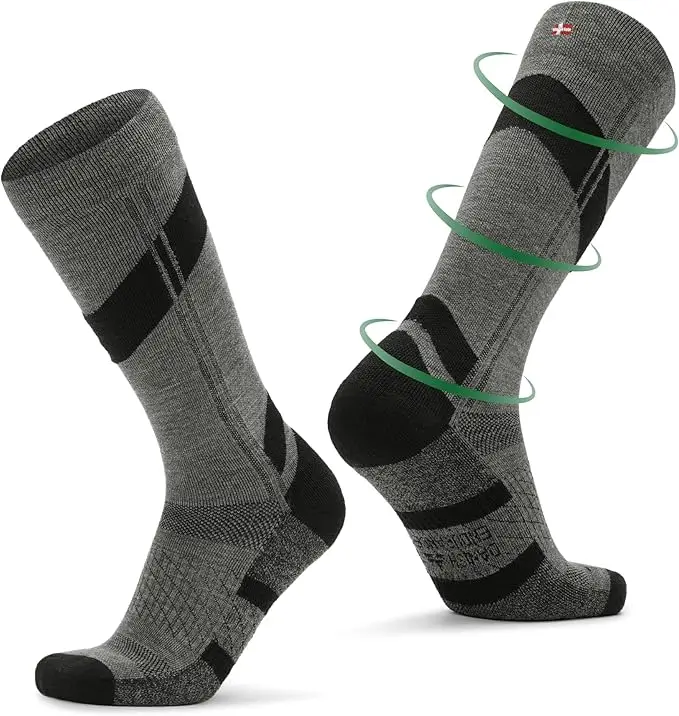
For nurses working in cold weather climates or perpetually cold hospital units, these merino wool compression socks provide warmth without bulk. The 15 to 20 mmHg compression works well for nursing demands.
Merino wool naturally wicks moisture while insulating, creating comfortable temperature regulation. The material is softer against the skin than synthetic alternatives, which some nurses prefer for all-day wear.
However, wool blends require more careful washing to maintain shape and compression. They’re also considerably more expensive than synthetic options. Best for nurses who prioritize natural fibers and work in cold environments.
For more information on wool sock options, check our guide on the best wool socks.
8. Sockwell Graduated Compression Socks (Best for Arch Support)

These include built-in arch compression bands along with leg compression, which helps nurses dealing with foot fatigue and plantar fasciitis alongside leg swelling.
The 15 to 20 mmHg leg compression prevents swelling, while the arch support reduces foot pain during long-standing periods. Nurses with foot issues alongside leg problems benefit from this dual support approach.
The bamboo rayon blend fabric is soft and moisture-wicking. However, the specialized construction makes these pricier than basic compression options. Worth it if you need both leg and foot support.
For comprehensive guidance on foot pain, see our article on compression socks for plantar fasciitis.
9. CompressionZ Compression Socks (Best for Athletes)

While not specifically designed for nursing, these athletic compression socks work extremely well for the physical demands of healthcare work. The 20 to 30 mmHg compression and performance fabric handle the constant movement and sweat of busy shifts.
The compression is firmer than some nurses want, but if you’re younger, active, and want maximum swelling prevention, these provide it. The athletic styling looks less medical, which some nurses prefer.
Durability is exceptional because these are designed for serious athletes who abuse their gear. Expect these to survive longer than medical-style compression with similar use.
10. NEWZILL Compression Socks (Best for Medical Options)

For nurses who want compression that doesn’t look purely medical, NEWZILL Compression offers extensive pattern and color choices while maintaining functional 15 to 20 mmHg compression.
The compression quality is solid, though not exceptional. These work fine for nursing use, with adequate moisture-wicking and reasonable durability. The appeal is primarily the styling options for nurses who want some personality in their compression.
Particularly popular with younger nurses and in pediatric units, where fun patterns are more appropriate than solid colors.
11. Fytto Compression Socks (Best for Sensitive Skin)

These use hypoallergenic materials and flat seam construction that reduces irritation for nurses with sensitive skin or skin conditions. The 15 to 20 mmHg compression is gentle but effective.
If you’ve had problems with compression causing skin reactions or uncomfortable seam rubbing, these address those issues. The smooth, soft fabric minimizes friction points that can develop during 12-hour wear.
The trade-off is slightly lower durability and higher cost. However, if skin comfort is a priority due to sensitivities, the investment is worthwhile.
12. ZaTech Copper Compression Socks (Best for Recovery)

While marketed primarily for athletic recovery, these work well for nurses who want maximum post-shift leg recovery. The 20 to 30 mmHg compression is strong, and the graduated design effectively reduces swelling.
Some nurses wear lighter compression during shifts and switch to these firmer socks for the drive home and evening to enhance recovery before the next shift. This rotation strategy works well if you work multiple consecutive days.
The copper infusion claims are questionable, but the compression quality itself is legitimate. Good option for aggressive swelling management and faster recovery between shifts.
Compression Socks for Nurses: Complete Comparison Table
Here’s a comprehensive comparison of all 12 compression socks to help you choose the best option for your nursing needs:
| Sock Name | Compression Level | Best For | Price Range | Material | Stay-Up Technology | Moisture Wicking | Durability |
|---|---|---|---|---|---|---|---|
| Physix Gear Sport | 28–30 mmHg | Overall best choice | 15–25 $ | Performance synthetic | Excellent silicone grip | Excellent | 5 of 5 |
| SB SOX | 15–20 mmHg | Maximum comfort | 19–23 $ | Soft synthetic blend | Good elastic band | Very good | 4 of 5 |
| Bluemaple Copper | 20–30 mmHg | Existing vein issues | 18–20 $ | Copper infused synthetic | Excellent silicone grip | Good | 5 of 5 |
| CHARMKING | 15–20 mmHg | Budget friendly | 11–15 $ | Basic synthetic | Fair elastic band | Fair | 3 of 5 |
| Vitalsox | 15–20 mmHg | Hot environments | 20–22 $ | Ventilated performance | Good silicone grip | Excellent | 4 of 5 |
| Doc Miller Premium | 20–25 mmHg | Stay-up power | 18–26 $ | Performance synthetic | Excellent wide silicone | Very good | 5 of 5 |
| Danish Endurance Merino | 15–20 mmHg | Cold weather | 25–25 $ | Merino wool blend | Good elastic band | Excellent natural | 4 of 5 |
| Sockwell | 15–20 mmHg | Foot and leg support | 33–35 $ | Bamboo rayon blend | Good elastic band | Excellent | 4 of 5 |
| CompressionZ | 20–30 mmHg | Athletic nurses | 24–28 $ | Athletic synthetic | Excellent silicone grip | Excellent | 5 of 5 |
| NEWZILL Compression | 15–20 mmHg | Style variety | 30–33 $ | Standard synthetic | Fair elastic band | Good | 3 of 5 |
| Fytto | 15–20 mmHg | Sensitive skin | 20–25 $ | Hypoallergenic synthetic | Good elastic band | Good | 3 of 5 |
| ZaTech Copper | 20–30 mmHg | Recovery focus | 14–17 $ | Copper infused synthetic | Good silicone grip | Very good | — |
How to Choose the Right Compression Socks for Your Nursing Needs
With so many options for compression socks for nurses, here’s how to narrow down the best choice for your specific situation.
Assess Your Current Leg Health
Start by evaluating your current leg condition honestly. Do you currently experience noticeable swelling by the end of shifts? Do you have visible varicose veins? Has a doctor diagnosed any venous conditions?
If you’re young, healthy, and just starting nursing without leg issues, begin with 15 to 20 mmHg compression for prevention. This moderate level prevents problems from developing without being unnecessarily strong.
If you already have visible varicose veins, significant end-of-shift swelling, or diagnosed venous insufficiency, you likely need 20 to 30 mmHg compression. The firmer pressure addresses existing problems rather than just preventing future issues.
If you have any diagnosed circulation problems or take medications affecting circulation, consult your doctor before choosing a compression level. Some conditions make compression inappropriate or require medical supervision.
Consider Your Work Environment
Think about your specific hospital environment and shift patterns. Do you work in warm units or cold ones? Are your shifts always 12 hours, or do you sometimes work shorter or longer?
For warm environments or if you overheat easily, prioritize moisture-wicking features and ventilation zones. Merino wool works for cold units but might be uncomfortable in warm areas.
If you work extremely long shifts (14 to 16 hours during busy periods), lean toward firmer compression that maintains its effectiveness through extended wear. Lighter compression might not provide adequate support during hour 14.
Additionally, consider your facility’s dress code. Some hospitals have color requirements for socks visible under scrubs. Check if you need specific colors before ordering patterned compression.
Factor in Your Budget and Replacement Timeline
Quality compression socks for nursing cost between 15 to 40 dollars per pair. You’ll realistically need at least three to four pairs to have clean compression available for every shift.
Budget at least 60 to 100 dollars for the initial compression sock investment. This might seem expensive, but consider it essential work equipment like good nursing shoes.
Plan to replace compression socks every three to six months, depending on how often you work. Budget roughly 100 to 150 dollars annually for compression if you work full-time.
Cheaper socks that fail quickly aren’t actually economical. Spending 20 dollars per pair that lasts five months beats spending 10 dollars per pair that fails after six weeks.
Test Before Committing to Multiple Pairs
Buy one pair first to test how well they work for your needs. Wear them for a full shift and evaluate compression effectiveness, comfort, stay-up capability, and whether you’d want to wear them every shift.
If the first pair works well, buy three more of the same brand and model. Having four pairs means you always have clean compression available, even if you work back-to-back shifts.
Don’t buy multiple different brands simultaneously. Stick with one that works rather than having several mediocre options. You can try different brands later if your initial choice stops working well.
Monitor Results and Adjust If Needed
Pay attention to how your legs feel during and after shifts with compression. Are you experiencing less swelling than before? Do your legs feel less tired? Can you notice a difference between shifts with and without compression?
If you’re not seeing clear benefits after two weeks of consistent use, you might need to adjust the compression level, try different brands, or verify you’re putting them on correctly.
Conversely, if compression feels uncomfortable, causes pain, or creates numbness, it’s too strong or poorly fitted. Don’t push through discomfort hoping you’ll adjust. Try a lower compression level or a different brand.
For comprehensive guidance on compression duration, read our medical guide on how long to wear Grip socks.
Common Mistakes Nurses Make With Compression Socks
Even experienced nurses make predictable errors with compression that reduce effectiveness. Avoid these pitfalls.
Mistake #1: Choosing Compression That’s Too Light
Many nurses start with 8 to 15 mmHg compression, thinking it will be more comfortable, then wonder why they’re not seeing benefits. Light compression works for prevention in people with sedentary jobs, but nursing demands more.
The 12 hours on your feet, constant movement on hard floors, and physical demands of patient care require at least 15 to 20 mmHg to provide adequate support. Don’t sacrifice effectiveness for minimal comfort gain.
If 15 to 20 mmHg feels uncomfortable, the problem is likely sizing rather than compression level. Proper fit should feel supportive without pain at appropriate compression levels.
Mistake #2: Wearing Compression Only on “Bad Days”
Some nurses only wear compression socks when they know they’ll have particularly demanding shifts. However, compression works best preventively rather than reactively.
Consistent daily use during all nursing shifts prevents cumulative leg stress from building up. Sporadic use means you’re constantly playing catch-up with swelling and fatigue rather than preventing it.
Make compression socks part of your standard nursing uniform, just like your scrubs and shoes. Wear them every shift, not just when you anticipate problems.
Mistake #3: Not Putting Them On Correctly
Compression socks need to be applied properly to work effectively. You can’t just yank them on like regular socks. Turn them inside out to the heel, slide your foot in, then gradually roll the sock up your leg.
Improper application creates uneven pressure distribution that reduces effectiveness and creates uncomfortable bunching. Take the extra minute to apply compression correctly before each shift.
Additionally, put compression on first thing in the morning before your legs have a chance to swell. Once swelling starts, getting compression on becomes much harder, and effectiveness decreases.
Mistake #4: Ignoring Care Instructions
Compression socks maintain their graduated pressure only if you care for them properly. Throwing them in hot water and high-heat dryers destroys the elastic fibers that create compression.
Wash compression in cold water on the delicate cycle and air dry. This preserves elasticity and extends thesock’sk lifespan significantly. The few extra minutes of care prevent having to replace expensive compression socks every month.
Mistake #5: Wearing Compression Past Its Effective Life
Compression socks don’t last forever. Once the elastic degrades, you’re wearing non-functional socks that provide no actual compression benefit, but you think you’re protected.
Replace compression socks when they become noticeably easier to put on (elasticity has degraded) or when visible wear, like holes or thinning, appears. Don’t try to squeeze extra months out of worn compression.
Mark purchase dates in your calendar and plan replacement every four to six months if you work full-time. This proactive replacement ensures you always have effective compression.
Mistake #6: Not Addressing Underlying Problems
Compression socks manage symptoms of venous stress but don’t cure underlying vein disease. If you have significant varicose veins, chronic severe swelling, or other concerning symptoms, you need medical evaluation beyond just wearing compression.
Some nurses use compression as a band-aid for problems that require actual medical treatment. If compression isn’t adequately managing your symptoms or if problems are worsening despite compression use, see a vascular specialist.
For comprehensive information about compression effectiveness and when medical care is needed, read our evidence-based article on do compression socks actually work.

Taking Care of Your Nursing Compression Socks
Proper care extends the life and effectiveness of compression socks for nurses. Follow these guidelines to maximize your investment.
Washing and Drying
Wash compression socks after every wear. The sweat, hospital substances, and general use during 12-hour shifts mean daily washing is essential for hygiene and maintaining elasticity.
Use cold water and a delicate cycle. Hot water breaks down elastic fibers faster. Gentle agitation preserves the graduated compression pattern better than aggressive washing.
Air dry completely before next use. Hang compression socks or lay them flat. Never put them in the dryer because heat destroys elasticity permanently. The inconvenience of air drying is worth preserving compression effectiveness.
Consider hand washing if you have time. This provides the gentlest care and maximum lifespan. However, a cold water delicate cycle in the washing machine is acceptable if hand washing isn’t realistic for your schedule.
Storage Between Shifts
Store compression socks flat or loosely rolled rather than tightly balled. Tight rolling or stuffing into small spaces can damage elastic fibers over time.
Keep compression separate from regular socks so you don’t accidentally grab non-compression socks when rushing to get ready for a shift. Many nurses dedicate a specific drawer or section just for compression.
If you work multiple back-to-back shifts, bring a spare pair in your bag. If your compression gets wet, damaged, or you spill something on them during a shift, having backup compression prevents working the rest of your shift without support.
Rotation Strategy
Own at least four pairs of compression socks so you can rotate them throughout your work week. Rotation allows each pair adequate recovery time between wears, which helps maintain elasticity.
Some nurses designate specific pairs for specific use. For example, one pair for the first shift of the week when legs are fresh, another pair for back-to-back shifts when you need maximum support. This personalization helps you match compression to your needs.
Mark or label socks with the purchase date using a fabric marker. This helps you track age and know when a replacement is needed. When one pair shows wear, replace it immediately rather than waiting for all pairs to fail.
Your Action Plan: Getting Started With Compression
Here’s your step-by-step guide to choosing and starting compression socks for nursing.
Step 1: Assess Your Needs
Evaluate your current leg health and nursing work demands. Are you preventive (no issues yet), managing mild symptoms (some swelling), or dealing with significant problems (varicose veins, chronic swelling)?
This assessment determines whether you need 15 to 20 mmHg (preventive and mild issues) or 20 to 30 mmHg (moderate to significant issues). When in doubt, start with 15 to 20 mmHg.
Step 2: Choose Your First Pair
Based on recommendations in this guide, select one pair that matches your needs and budget. For most nurses starting compression, Physix Gear Sport or SB SOX provide an excellent balance of effectiveness and comfort.
Order from retailers with good return policies so you can exchange if sizing isn’t right on the first try. Proper fit is crucial for compression effectiveness.
Step 3: Test During a Full Shift
Wear your first pair for a complete 12-hour shift. Pay attention to comfort, compression effectiveness, whether they stay up, and how your legs feel compared to shifts without compression.
Take notes after the shift about what worked well and what didn’t. This information helps you decide whether to buy more of the same pair or try different options.
Step 4: Build Your Compression Wardrobe
If the first pair works well, order three more of the same brand and compression level. Having four total pairs ensures you always have clean compression available.
If the first pair didn’t work perfectly, identify specifically what was wrong (too tight, too loose, slid down, uncomfortable top band, etc.) and choose a different option addressing that issue.
Step 5: Make a Compression Routine
Integrate compression into your standard nursing shift preparation. Lay out compression socks with your scrubs the night before shifts. Put them on first thing in the morning as part of getting dressed.
Track how you feel over the first month of consistent compression use. Most nurses notice significant improvement in end-of-shift leg comfort and energy levels within two weeks of regular compression wear.
For detailed guidance on appropriate compression wearing schedules, see our comprehensive medical guide on how long to wear compression socks.
Final Thoughts on Compression Socks for Nurses
Finding the best compression socks for nurses dramatically improves your daily comfort and long-term leg health during a physically demanding career. The right compression prevents the swelling, fatigue, and vein problems that plague many healthcare workers after years of 12 hour shifts on hard hospital floors.
However, effectiveness requires choosing appropriate compression levels (15 to 20 mmHg for most nurses), ensuring proper fit (knee high that stays up without rolling), prioritizing quality materials (moisture-wicking with reinforced wear points), and wearing compression consistently (every shift, not just bad days).
The initial investment in quality compression socks pays dividends through improved daily comfort, reduced leg problems, and better energy levels after long shifts. Many nurses say compression is as important as good shoes for making nursing shifts sustainable long-term.
Don’t wait until you develop serious leg problems to start wearing compression. Preventive use is easier and more effective than trying to manage problems after they develop. Your legs endure enormous stress during nursing careers, and compression is one of the most effective tools for protecting them.
If you found this guide helpful, explore our other comprehensive resources on how compression socks work, do compression socks actually work, can you wear compression socks to bed, and compression socks vs support socks vs grip socks to build a complete understanding of compression therapy for healthcare professionals.
Meanwhile, invest in your leg health now. The few minutes and dollars spent choosing proper compression socks prevent years of discomfort and potential vein problems down the road. Your legs will thank you at the end of every shift.