

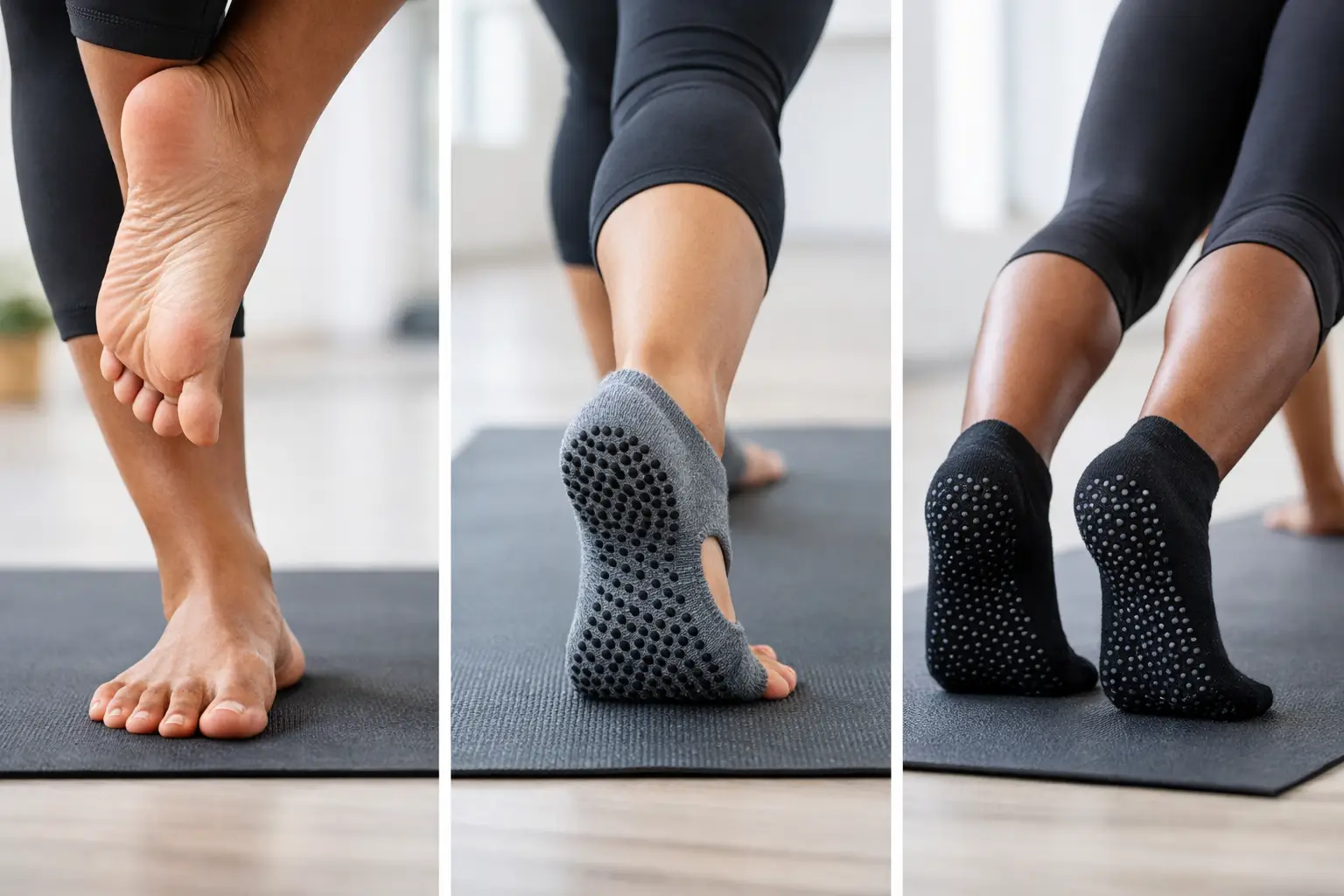
The instructor looked at my feet and smiled. “First time doing yoga?” I nodded, suddenly self-conscious about my running socks in a room full of barefoot yogis. She whispered, “Most people go barefoot, but grip socks are fine if you prefer.” I spent the entire class distracted, wondering if my socks made me look like a beginner or if everyone else’s bare feet were slipping on their mats.
That awkward first yoga class sent me on a mission to understand the sock situation in yoga. I’ve now practiced at over 20 different yoga studios, talked to dozens of instructors, and tested every type of yoga footwear option. The answer to whether you should wear socks to yoga isn’t a simple yes-or-no. It depends on the yoga style, your personal needs, studio rules, and what makes you most comfortable.
The Quick Answer: Do You Wear Socks to Yoga?
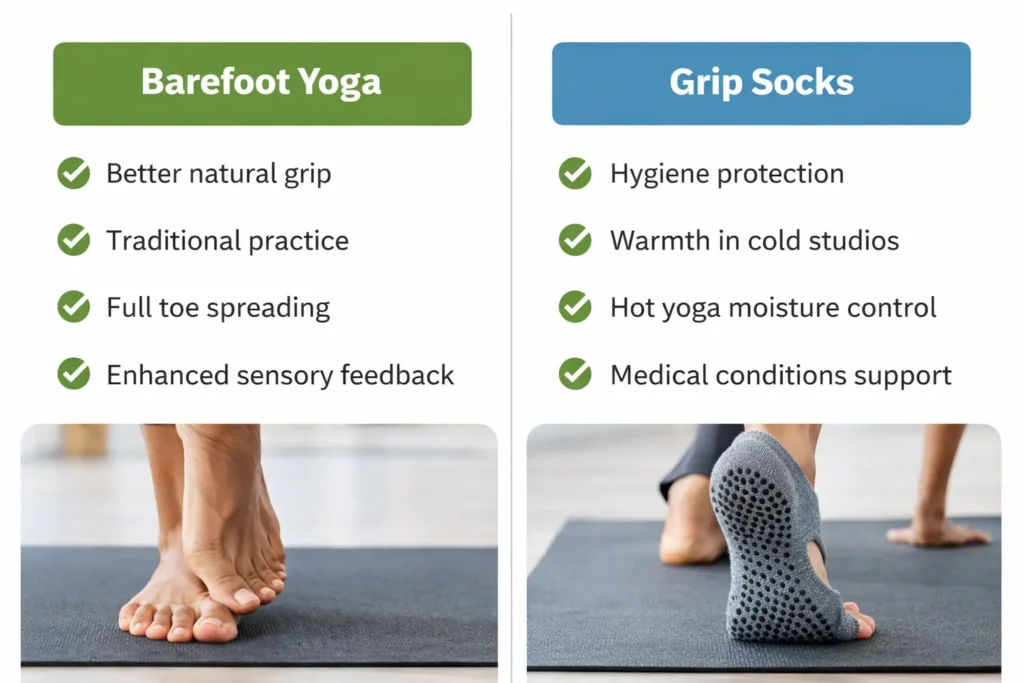
Traditional yoga practice is done barefoot because bare feet provide better grip on yoga mats, allow natural toe spreading for balance poses, enable direct contact with the ground for stability, and follow yoga tradition dating back thousands of years. However, wearing grip socks to yoga is perfectly acceptable in most modern studios, especially for hot yoga (prevents mat slipping from sweat), people with foot sensitivity or hygiene concerns, cold studio environments, or anyone who feels more comfortable covered. Regular socks without grip are not recommended because they create dangerous slipping hazards on yoga mats.
Most yoga instructors welcome students wearing grip socks but discourage regular socks. The key is choosing appropriate footwear for your situation rather than following rigid rules that don’t serve your practice.
What Yoga Tradition Says About Socks
Traditional yoga, developed in ancient India, was always practiced barefoot. The connection between bare feet and the ground (or mat) represents grounding and being present. In yoga philosophy, the feet contain important energy points that connect to organs and systems throughout the body. Direct contact with the ground allows energy flow and helps practitioners feel rooted.
Modern yoga in Western countries maintains this barefoot tradition in most styles. Walk into any yoga studio, and you’ll see a shoe rack near the entrance where students leave their shoes before entering the practice space. The barefoot tradition continues because it provides practical benefits beyond philosophy.
However, yoga has evolved significantly from its ancient practice. Modern studios offer heated rooms, different flooring materials, and diverse student populations with varying needs. This evolution has made sock options more accepted in contemporary yoga practice.
Why Most Yogis Practice Barefoot
Bare feet provide several practical advantages for yoga practice that explain why most practitioners prefer going sockless.
Better Mat Grip and Traction
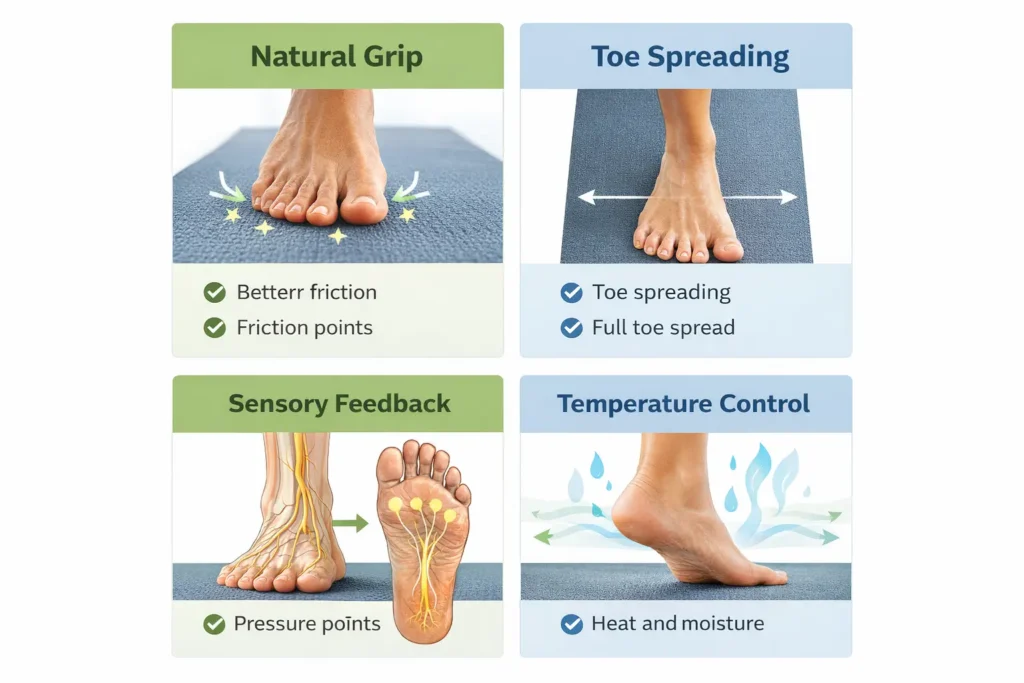
Bare skin creates natural friction against yoga mats that socks can’t match. During standing poses like Warrior II or Triangle, bare feet grip the mat securely, preventing the sliding that causes instability and potential injury. The natural tackiness between skin and mat rubber provides reliable traction through flowing sequences.
Regular socks eliminate this friction, creating a slippery surface that makes holding poses nearly impossible. Even slight movements cause feet to slide, forcing constant readjustment that disrupts practice flow and concentration.
Natural Toe Spreading for Balance
Yoga poses require spreading toes wide to create a stable foundation. Bare feet allow each toe to press independently into the mat, distributing weight evenly and improving balance. This natural toe spreading is essential for challenging balance poses like Tree Pose or Half Moon.
Socks, particularly tight ones, compress toes together and limit their ability to spread and grip. This restriction reduces the foundation stability that proper toe spreading provides.
Sensory Feedback and Body Awareness
Bare feet provide sensory information about weight distribution, balance, and alignment. Feeling the mat directly helps you adjust foot position subtly, engaging the right muscles and maintaining proper form. This proprioceptive feedback is fundamental to developing body awareness in yoga practice.
Socks create a barrier that reduces sensory feedback. You lose subtle information about foot placement and weight distribution, making precise adjustments harder and reducing overall body awareness during practice.
Temperature Regulation
Feet contain numerous sweat glands that help regulate body temperature during physical activity. Bare feet allow natural temperature regulation through evaporation, keeping feet comfortable during practice.
Socks trap heat and moisture, potentially making feet uncomfortable during intense practice styles or in heated rooms. However, this works both ways since bare feet can feel cold in unheated studios during winter.
When Wearing Socks to Yoga Makes Sense
Despite the barefoot tradition, several situations make wearing socks to yoga completely appropriate and sometimes preferable.
Hot Yoga and Bikram
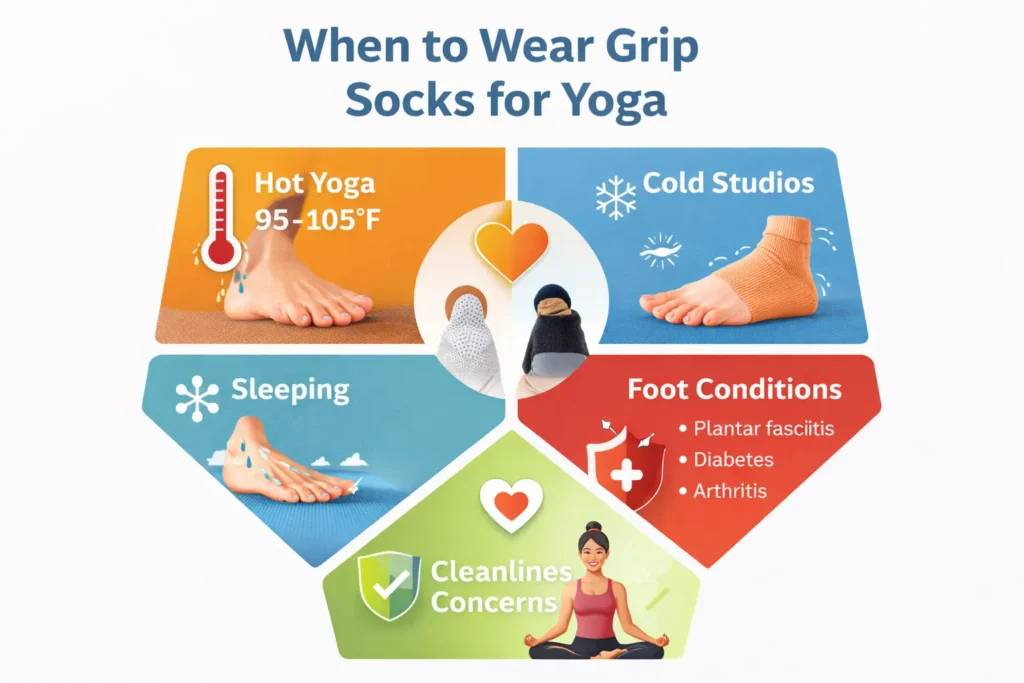
Hot yoga practiced in rooms heated to 95-105°F creates extreme sweating. While you might think bare feet would work better in the heat, the opposite often proves true. Excessive foot sweat makes bare skin slip on mats just as much as regular socks would.
Grip socks designed for hot yoga wick moisture while providing traction through silicone patterns. Many hot yoga practitioners swear by grip socks because they prevent the dangerous slipping that sweaty bare feet cause during heated practice.
The moisture-wicking properties of quality grip socks keep feet drier than bare skin in hot conditions, actually improving grip and comfort compared to barefoot practice in extreme heat.
Hygiene and Cleanliness Concerns
Yoga studios serve hundreds of students weekly, all practicing on shared mats or bringing personal mats that touch the studio floors. While studios clean regularly, some people prefer the hygiene barrier that socks provide.
Grip socks create a layer between your skin and surfaces that other people’s feet have touched. This peace of mind helps some practitioners focus on practice rather than worrying about cleanliness.
Additionally, people with athlete’s foot, plantar warts, or other foot conditions should wear socks to protect other students and prevent spreading infections. Grip socks allow continued practice while managing these temporary conditions responsibly.
Foot Sensitivity and Medical Conditions
Several conditions make barefoot yoga uncomfortable or impractical:
Plantar Fasciitis: The heel pain from plantar fasciitis can make barefoot standing poses excruciating. Cushioned grip socks provide padding that makes practice tolerable while recovering.
Diabetes: People with diabetes often have reduced foot sensation and increased injury risk. Socks protect feet from minor cuts or abrasions that could become serious complications.
Raynaud’s Disease: This condition causes extreme cold sensitivity in the extremities. Even moderately cool studios feel painfully cold to affected feet. Warm grip socks make practice possible.
Arthritis: Foot arthritis can make weight-bearing on bare feet painful. Light cushioning in grip socks reduces discomfort during standing sequences.
For detailed guidance on medical sock needs, see our comprehensive guide on the best diabetic socks for women.
Cold Studio Environments
Not all yoga studios maintain comfortable temperatures year-round. Winter practice in unheated or minimally heated studios can leave bare feet painfully cold, making it impossible to focus on practice.
Grip socks provide warmth that makes cold-weather yoga enjoyable rather than endurance. The ability to focus on poses rather than freezing feet dramatically improves practice quality in cold environments.
Personal Comfort and Modesty
Some people simply feel more comfortable with covered feet. Cultural backgrounds, personal preferences, or body image concerns make bare feet feel vulnerable or exposed. Yoga should make you feel comfortable and safe, not self-conscious.
If wearing socks helps you relax and focus on practice, that benefit outweighs any traditional preference for barefoot practice. Comfortable students practice better than uncomfortable ones, following rules that don’t serve them.
Types of Socks for Yoga
If you decide to wear socks for yoga, choosing the right type dramatically affects how well they work.
Grip Socks (Best Option)
Grip socks feature silicone or rubber patterns on the bottom that provide traction on yoga mats. These socks are specifically designed for yoga, Pilates, and barre, making them the only appropriate sock choice for yoga practice.
Quality grip socks come in several styles:
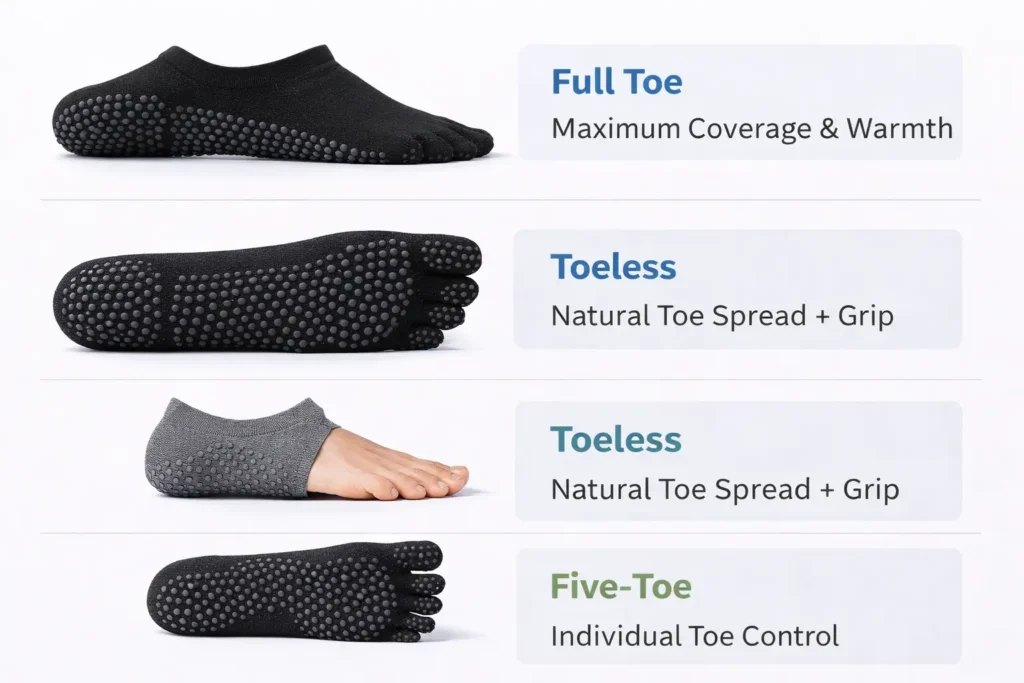
Full Toe Grip Socks: Cover the entire foot like regular socks, but include grip patterns on the sole. These provide maximum coverage and warmth while maintaining traction.
Toeless Grip Socks: Leave toes exposed while covering the rest of the foot. This design allows natural toe spreading for balance while providing grip and coverage for the arch and heel.
Five-Toe Grip Socks: Separate individual toes like gloves for feet. This style enables complete toe spreading and individual toe grip while providing full foot coverage.
The grip patterns use silicone dots, lines, or geometric shapes that create friction against yoga mats without being sticky or leaving residue. Quality grip socks maintain traction even when damp from sweat.
For comprehensive grip sock guidance, explore our detailed article on yoga socks and best grip socks for yoga.
Regular Athletic Socks (Not Recommended)
Standard athletic socks, running socks, or casual socks do not work for yoga. They lack grip patterns, creating a dangerously slippery surface between your feet and the mat.
Attempting yoga in regular socks risks injury from falling during standing poses or slipping during transitions. No yoga instructor will recommend regular socks, and many studios explicitly prohibit them for safety reasons.
Barefoot-Style Toe Socks
Some toe-separating socks don’t include grip patterns but allow individual toe movement. While better than regular socks, these still lack the traction needed for safe yoga practice. They’re not appropriate substitutes for proper grip socks.
What Different Yoga Styles Require
Sock appropriateness varies by yoga style due to different movement patterns, temperatures, and intensity levels.
Hatha and Gentle Yoga
Traditional hatha yoga and gentle classes move slowly through poses with longer holds. Most practitioners go barefoot in these classes because the slower pace doesn’t generate much sweat, and the gentle movements work well with natural foot grip.
However, grip socks work perfectly fine in gentle yoga if you prefer them. The slower pace means grip sock traction easily handles the modest demands these styles place on your footing.
Vinyasa and Power Yoga
Vinyasa flow and power yoga involve continuous movement linking breath and motion. The dynamic nature generates heat and sweat while requiring quick transitions and solid footing through flowing sequences.
Barefoot practice works well in moderate temperatures, but many vinyasa practitioners switch to grip socks when practice gets sweaty. The flowing nature means you need reliable traction whether bare or socked, making quality grip socks a smart backup option.
Hot Yoga and Bikram
Hot yoga practiced in rooms heated to 95-105°F creates extreme sweating that makes barefoot practice quite slippery for many people. While some yogis develop enough foot calluses and mat familiarity to manage barefoot in heat, many find grip socks essential.
Hot yoga-specific grip socks use moisture-wicking materials that handle sweat better than bare skin on mats. The combination of wicking and grip patterns provides reliable traction throughout heated practice.
Yin and Restorative Yoga
Yin yoga involves holding passive stretches for 3-5 minutes in relaxed positions, mostly seated or lying down. Restorative yoga uses props to support the body in comfortable resting poses.
These gentle styles involve minimal standing work and no dynamic movement, making sock choice largely irrelevant to practice. Wear whatever makes you comfortable since traction demands are minimal.
Aerial and Acro Yoga
Specialized yoga styles like aerial yoga (using hammocks) or acro yoga (partner acrobatics) have specific footwear requirements that vary by studio. Many aerial yoga classes require bare feet for hammock grip, while some allow grip socks.
Check with your specific studio before class to understand their requirements for these specialized styles.
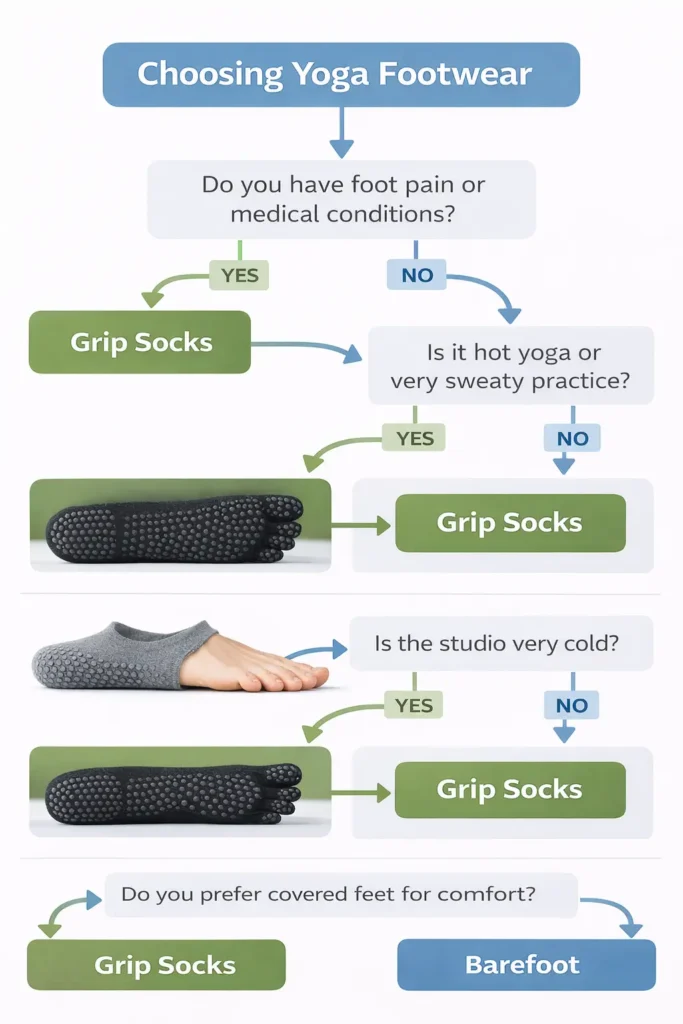
How to Decide: Socks or Barefoot?
Making the right choice for your practice involves considering several personal factors.
Try Both and See What Works
The best way to decide isto experienceg both options firsthand. Attend a few classes barefoot to understand the traditional approach and sensory feedback benefits. Then try a session in quality grip socks to compare how they feel.
Pay attention to:
- Which option feels more stable during standing poses
- Whether you focus better on practice or on your feet
- How do your feet feel during and after class
- Whether you feel more comfortable mentally and physically
Your body will tell you what works better for your individual needs.
Consider Your Practice Environment
Studio characteristics influence what works best:
Temperature: Cold studios favor socks for comfort. Hot studios often work better with grip socks that wick moisture. Moderate temperatures work well either way.
Flooring: Rubber or cork studio floors feel comfortable barefoot. Cold tile or wood floors might feel better with socks.
Mat Quality: Sticky, high-quality mats provide excellent barefoot grip. Cheaper or worn mats might work better with grip socks, adding extra traction.
Listen to Your Body
Physical factors should drive your decision:
Foot Conditions: Any foot pain, sensitivity, or medical issues lean toward socks for protection and comfort.
Sweat Levels: Heavy foot sweating might work better with moisture-wicking grip socks than slippery bare feet.
Temperature Sensitivity: Cold feet need socks. Feet that run hot might preferto be barefoot.
Respect Studio Preferences
While most studios welcome grip socks, some traditional studios strongly prefer barefoot practice. Hot yoga studios often encourage grip socks. Check studio policies and respect their preferences while finding what works for you within those guidelines.
Best Grip Socks for Yoga Practice
If you choose to wear socks for yoga, these options provide reliable performance across different practice styles.
For Hot Yoga
Recommended: Moisture-wicking grip socks with breathable materials and full-sole grip coverage. Look for thin, lightweight designs that don’t trap excessive heat while providing traction in sweaty conditions.
For Gentle and Restorative Yoga
Recommended: Comfortable grip socks with soft materials and light compression. Since traction demands are minimal in gentle practices, prioritize comfort and warmth over aggressive grip patterns.
For Vinyasa and Power Yoga
Recommended: Durable grip socks with comprehensive sole coverage and arch support. The dynamic movements require a reliable grip throughout flowing sequences and quick transitions.
For All Yoga Styles
Toeless grip socks work excellently across all yoga types because they combine natural toe spreading with grip security and foot coverage. This versatile style satisfies both traditionalists who value toe freedom and practitioners who want coverage and traction.
For specific product recommendations, see our detailed guide on the best grip socks for yoga.
Common Questions About Wearing Socks to Yoga
Can you wear regular socks to yoga? No, regular socks without grip patterns create dangerous slipping hazards on yoga mats. If you want to wear socks to yoga, they must be grip socks specifically designed for mat practice.
Will instructors judge me for wearing socks? Most modern yoga instructors welcome students wearing appropriate grip socks. They understand that different people have different needs. However, wearing regular socks might prompt gentle correction for safety reasons.
Do grip socks work as well as bare feet? Quality grip socks provide comparable traction to bare feet on yoga mats. In some situations, like hot yoga with excessive sweating, grip socks actually outperform bare feet by wicking moisture.
Can beginners wear socks to yoga? Absolutely. Beginners should wear whatever makes them comfortable and confident during practice. Many beginners start with grip socks and later transition to barefoot practice once they feel more experienced.
Are expensive grip socks worth it? Quality grip socks with durable construction, reliable grip patterns, and moisture-wicking materials justify their higher cost through better performance and longer lifespan. Budget grip socks often lose grip quickly and need frequent replacement.
How do I clean yoga grip socks? Wash grip socks after each use in cold water ona gentle cycle. Air dry to preserve grip patterns. Never use fabric softener, which coats grip surfaces and reduces traction. For detailed care instructions, see our guide on how to wash grip socks.
Can I wear compression socks to yoga? Compression socks aren’t ideal for yoga because they restrict natural foot movement and the circulation changes that occur during practice. If you need compression for medical reasons, consult with your doctor about appropriate options for exercise.
Making Your Decision
The choice between barefoot and socked yoga ultimately comes down to what serves your practice best. Traditional barefoot practice offers authentic sensory feedback and natural grip that many practitioners prefer. Grip socks provide comfort, hygiene, and traction that make yoga accessible and enjoyable for people who need or prefer coverage.
Neither choice is inherently right or wrong. The best approach honors your body’s needs, respects studio environments, and supports consistent practice. Yoga is about union and connection, not rigid adherence to rules that don’t serve your well-being.
Try both options mindfully, pay attention to how each feels in your body, and choose what allows you to focus on breath, movement, and presence rather than worrying about your feet. That’s the spirit of yoga, regardless of what covers your feet.
For related guidance on yoga practice essentials, explore our comprehensive guides on best grip socks, non-slip socks, and best ankle socks to find exactly what your practice needs.
Questions about choosing the right option for your yoga practice? Share your yoga style and any foot concerns in the comments, and I’ll provide personalized recommendations for barefoot versus grip sock practice.