


I’ll be honest with you. The first time I bought “performance socks,” I had no idea there were different types. I walked into the store, grabbed a pack that said something about stability, and thought, cool, this is what runners wear. Turns out I bought grip socks even though I wasn’t doing anything that required traction. I remember slipping them on before a long run and thinking, why do these feel sticky inside my shoes? And why does everyone online talk about compression when these clearly aren’t compressing anything?
Here’s the thing. A lot of people mix these two up because the marketing looks weirdly similar. Both are sold as “performance-enhancing,” both show athletes on the packaging, and both get advertised with phrases that sound scientific enough to confuse anyone. And since they sometimes appear in the same aisle, it’s easy to assume they do the same job.
So this comparison is here to clear up all the confusion. You’ll walk away knowing exactly what each type does, who they’re for, and whether you actually need compression socks, or maybe both.
QUICK ANSWER BOX
TL;DR: Grip and compression solve completely different problems.
Grips give you traction inside shoes or on studio floors.
Compression socks improve circulation and reduce swelling.
If you need stability, go grip. If you need recovery, go compression.
WHAT ARE GRIP SOCKS?

They look like regular athletic socks but with silicone dot patterns across the bottom. Some brands add them inside the sock too. Those sticky patterns create traction so your foot doesn’t slide around inside your shoe. And if you’ve ever played football or basketball, you know how annoying that sliding feels. Every time you cut, sprint, or change direction, your toes jam the front of your shoe. That leads to blisters, bruised toenails, and half-second hesitations that actually affect performance.Learn more about how to wear grip socks properly to maximize blister prevention
They’re huge in football (soccer), basketball, tennis, and basically any sport that needs quick movement.If you’re looking for the best options, check out our guide to the best grip socks for football. You’ll also see them everywhere in Pilates and yoga, especially in studios that don’t allow bare feet.We’ve tested the top grip socks for Pilates and best grip socks for yoga if you need specific recommendations.”
Personally, my first “aha” moment with grip socks came during a HIIT class. I used to slide around on the studio floor whenever I did lunges or mountain climbers. The first time I wore grip socks, it felt like someone glued my feet into a stable position. Suddenly I could move faster without thinking about slipping. And honestly, that confidence alone is worth it.
Grip socks are simple: They stop slipping. They improve control. They help prevent blisters. That’s it. But they do that really well.
WHAT ARE COMPRESSION SOCKS?
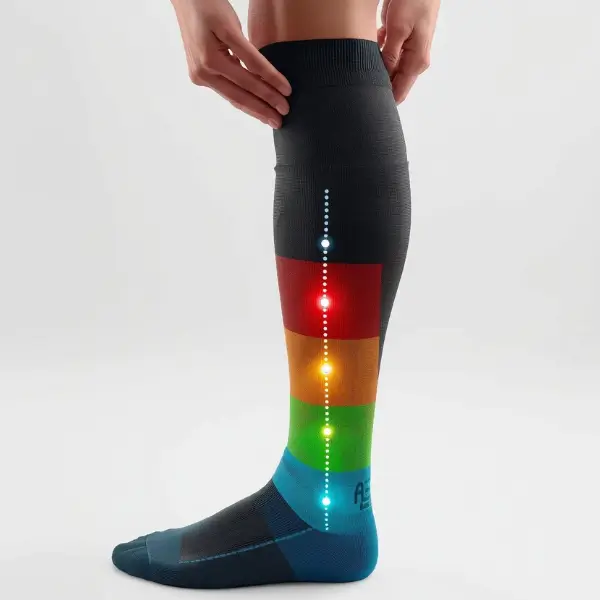
Compression socks are a totally different beast. Instead of focusing on traction, they focus on circulation. They apply graduated pressure from your ankle upward — tighter at the bottom, lighter at the top — and that helps push blood back toward your heart. The result is less swelling, better blood flow, and quicker recovery after workouts.
If you’ve ever taken a long flight and felt your legs puff up like balloons, compression socks would’ve prevented that. Same for standing all day at work. Same for running long distances.
The first time I used compression socks was after a brutal leg day. Someone at the gym told me, “Just wear these after your workout. Trust me.” And look, I’m skeptical about fitness gimmicks, but I swear my calves felt noticeably lighter the next morning. Less tight. Less sore. It wasn’t magic, but it was absolutely noticeable.
Nurses wear them. Teachers wear them. Travelers wear them. Pregnant women wear them. Pretty much anyone who deals with swelling or circulation issues can benefit.
So where grip socks help your movement during the activity, compression socks help your legs recover after.
THE KEY DIFFERENCES
This is where the confusion stops. Let’s break it down piece by piece so you can see exactly how different these socks really are.Purpose
Grip socks are all about performance. They keep your foot locked in place so you can move with confidence. If your foot slides inside your shoe during quick agility work, grip socks fix that instantly.
Compression socks, on the other hand, are about circulation, recovery, and reducing fatigue. They don’t help you cut faster or jump higher. They help your legs feel better afterward.
I use grip socks when I’m training hard. I use compression socks when I’m recovering or traveling. Two totally different moments.
Design
Grip socks
These are usually ankle or crew length. They’re made with breathable athletic fabrics and have silicone grip patterns on the sole. Some brands use thick, aggressive patterns for sports, while others use subtle dots for yoga and Pilates.
When you wear them, they feel snug but comfortable. And you’ll immediately notice the traction the moment you step on a smooth surface.
Compression socks
Compression socks are taller, usually knee-high — because the goal is to push blood upward. They feel tight, especially around the ankle and lower calf. Some people need a day or two to get used to the pressure.
They’re engineered with zones of tension, kind of like a stretchy medical garment. There’s no silicone on them. No traction features. They’re all about consistent pressure.
Who Needs Them
People who benefit from grip socks:
✔ Football and soccer players
✔ Basketball players
✔ Runners who slide inside their shoes
✔ Tennis or court-sport athletes
✔ Pilates and yoga students
✔ Anyone training on smooth floors
✔ Anyone prone to blisters from foot movement
People who benefit from compression socks:
✔ Runners who want faster recovery
✔ People who stand all day (nurses, servers, retail workers)
✔ Travelers on long flights
✔ Pregnant women dealing with swelling
✔ People with circulation issues (doctor’s guidance needed)
✔ Athletes after heavy training sessions
I reach for grip socks when I need control. I reach for compression socks when my calves feel heavy or when I know I’ll be sitting for hours.
Performance Benefits
Grip Socks:
These shine during activity. Better traction means better control of your footing, which matters in every direction you move. You get fewer blisters because your foot isn’t sliding around generating hot spots. You also feel more confident pushing off the ground quickly.
Read our full comparison: grip socks vs regular socks to see exactly how much difference they make.
I noticed this the most during lateral movements. Before grip socks, I’d hesitate slightly because my feet slid a bit. With them, I felt locked in.
Compression Socks:
These shine after the activity. Less swelling. Less soreness. Better blood flow. They keep your legs from feeling “heavy” or “dead” the following morning.
I’ve worn them post-half-marathon and the next day my calves felt way better compared to times I didn’t wear them.
Comfort
Grip socks feel light. Not tight. Once you’re used to the silicone, you don’t notice them much.
Compression socks are tight,unavoidably. They’re supposed to be. Some people love the snug compression feel. Others take a bit to adjust.
Price
Grip socks usually cost 15 to 30 dollars per pair depending on brand and sport.
Compression socks usually cost 20 to 50 dollars because the fabric engineering is more complex.
Both can be worth the investment for different reasons.
CAN YOU WEAR BOTH?
Absolutely,and plenty of athletes do.
You’d wear grip socks during your workout when traction matters.
Then you’d wear compression socks afterward to support blood flow and speed up recovery.
Some brands even make hybrid with light compression and grip built in. I’ve tried a couple. They’re fine for light sessions, but they don’t replace true compression, and they don’t replace high-performance grip socks. They’re more of a convenient middle ground.
My honest recommendation? Use each type for its intended purpose. Grip for training. Compression for recovery.
WHEN TO USE EACH TYPE
Use Grip Socks For:
• Football or soccer matches
• Pilates and yoga classes
• Indoor studio classes like barre or HIIT
• Basketball, tennis, squash, or court sports
• Trail running if your foot slides forward
• Any time you feel instability inside your shoes
Not sure which grip socks to buy? Start with our complete buying guide.
Use Compression Socks For:
• Post-workout recovery days
• Long flights and long car rides
• Standing all day at work
• Heavy leg training days
• Running long distances
• Reducing swelling during pregnancy
• Reducing fatigue during travel or long shifts
If you like data, here’s my experience: using grip socks during workouts improved my control. Using compression socks after workouts improved how my legs felt the next day. Simple as that.
COMPARISON TABLE
| Feature | Grip Socks | Compression Socks |
|---|---|---|
| Purpose | Traction and stability | Circulation and recovery |
| Design | Silicone grip dots | Graduated pressure zones |
| Best For | During activity | After activity or travel |
| Price | 15 to 30 dollars | 20 to 50 dollars |
| Benefit | Better control, fewer blisters | Less swelling, faster recovery |
WHICH SHOULD YOU CHOOSE?

If you need traction, stability, and control during movement, go with grip socks. They make a huge difference in agility work, ball sports, and studio workouts.
If you need recovery, better circulation, or long-day comfort, you’ll benefit more from compression socks. They help your legs feel fresher and prevent swelling when you’re on your feet for hours.
If you’re an athlete, honestly, you’ll probably end up using both at different times. I do. Most people who take training seriously do too.
My honest take? Start with whatever solves your biggest problem today. If your feet slide, get grip socks. If your legs feel heavy, get compression socks.
FAQ
Are grip socks the same as compression socks?
No. Grip socks improve traction. Compression socks improve circulation.
Can compression socks have grip?
Some hybrids exist, but they’re not as effective as true grip socks.
Which is better for running?
Grip socks help control inside the shoe. Compression socks help recovery afterward.
Can I wear compression socks during exercise?
Yes, many runners do, but they won’t stop your foot from sliding like grip socks.
Do grip socks help with circulation?
No, they’re not designed for that.But they do help with stability. see what grip socks are actually for.
Are compression socks worth it for athletes?
If you struggle with soreness or swelling, they’re absolutely worth it.
Can I sleep in compression socks?
Not usually recommended unless your doctor tells you to.
Which prevents blisters better?
Grip socks prevent blisters caused by foot movement. Compression socks don’t.
CONCLUSION
Grip socks and compression socks sound like they’re part of the same category, but they’re not rivals at all. They’re tools. Different tools. Grip socks help you move better. Compression socks help you feel better afterward. I’ve used both for years, and honestly, I can’t imagine training without either one now.
If stability and performance are your priority, get grip socks.
Do you want recovery and comfort? get compression socks.
If you’re active and train frequently, you’ll probably end up using both.
Once you try them in the right scenarios, everything makes sense.