

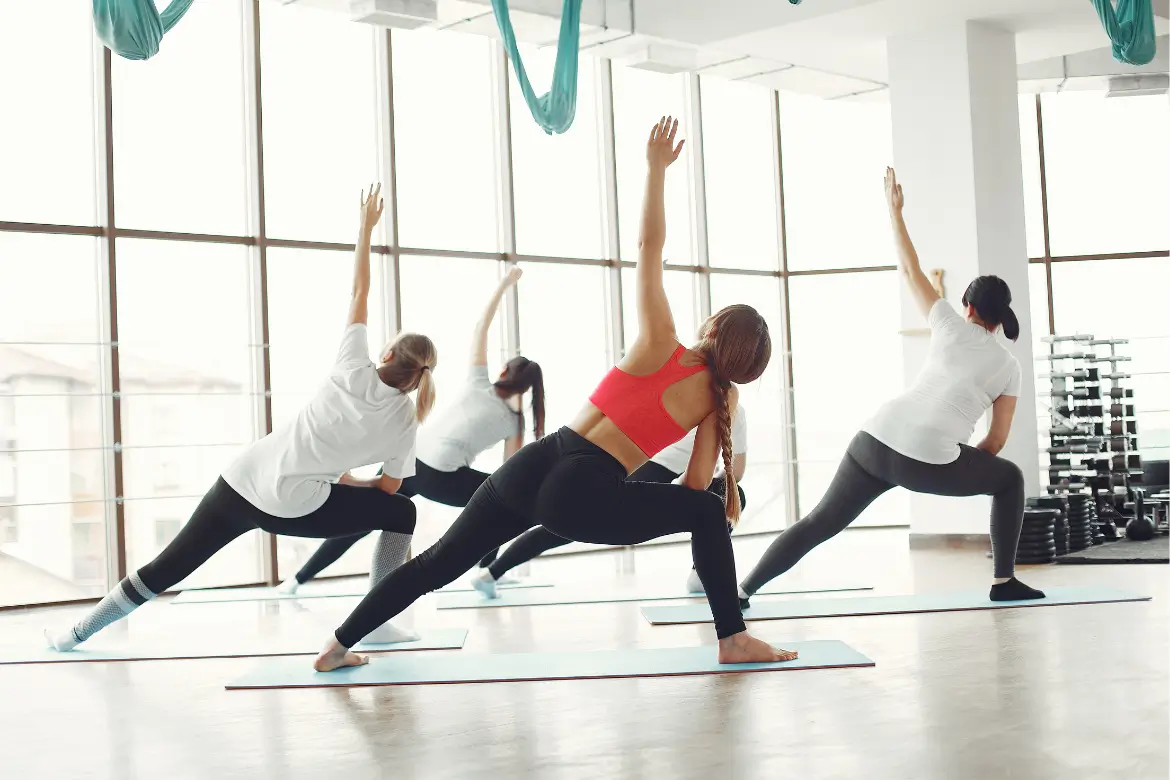
I still remember my very first Pilates class. I walked in wearing regular cotton ankle socks because I figured, hey, socks are socks, right? Wrong. The second we started footwork on the reformer, I felt my feet sliding around like they were on ice. I was gripping the footbar with my toes, desperately trying not to fall off. Meanwhile, everyone else looked so grounded and stable. That was the moment I realized I needed proper Pilates grip socks.
Regular socks just don’t cut it. They slip. They bunch up. and they make you feel disconnected from the movements. And Pilates is all about connection. Foot to platform. Heel to carriage. Toes to mat. If you’re sliding, you’re wasting energy and honestly making the workout harder than it needs to be.
This guide covers the best Pilates socks I’ve personally tested in 2025, what to look for, which ones are worth buying, and a few personal stories from the studio. You’ll also find internal links to helpful guides like grip socks vs regular socks and how to wear grip socks if you’re still learning.
Quick Answer Box
If you want the fastest answer, the best overall Pilates socks this year are Tavi Noir Emma. Amazing grip, super cute, and work for both reformer and mat. Grip matters because Pilates involves a lot of controlled footwork and stability, so you don’t want sliding. Expect to pay anywhere between fifteen and forty dollars depending on the brand.
Why You Need Pilates Socks
Here’s the thing. Reformer Pilates is impossible without solid grip. Every movement starts with your feet connecting with something, the footbar, the platform, the carriage. If that connection isn’t secure, you will feel it immediately. I’ve had entire sets ruined because my socks slid at the wrong moment.
Mat Pilates might seem easier since you’re on the floor, but nope. If you’ve ever done glute bridges, planks, pikes, or teaser variations without grip socks, you know the feeling of losing traction. It’s distracting and honestly a little embarrassing when your foot shoots out unexpectedly.
Most studios require grip socks now anyway, partly for hygiene but mostly for safety. And trust me, they’re not just upselling you. Proper Pilates socks improve your balance, help you control each movement, and reduce slipping during transitions. Before I started wearing real grip socks, I slipped twice on the reformer doing standing lunges and nearly fell off. When I switched, the difference was instant. More control. More confidence. Better workouts.
Do You Really Need Grip Socks? An Instructor’s Honest Answer
As an instructor, the most common question I get from beginners is: “Can’t I just go barefoot?” While you can technically do Mat Pilates barefoot, the Reformer carriage is a different story.
From a professional perspective, grip socks are mandatory for three reasons:
- Kinetic Chain Alignment: When your feet slip even a millimeter during a “Footwork” series, your knees and hips compensate. This leads to poor form and potential joint strain.
- Hygiene: Studios are high-traffic areas. Socks provide a bio-barrier between you and the equipment.
- Advanced Moves: You cannot safely perform a Plank-to-Pike or Elephant on the reformer without a high-friction connection. Without socks, you are fighting the equipment rather than working your core.
If you want the full breakdown of why grip socks matter, check out the guide on grip socks vs regular socks.
What to Look For in Pilates Socks
Grip Quality
You want silicone dots or patterns that cover the entire sole, not just the heel. A full grip layout is essential for reformer Pilates because your foot angle changes constantly. Some socks have cute heart shaped grips, others use honeycomb patterns. The ones that impressed me were the socks that didn’t lose traction even after ten washes. A lot of cheaper socks fade fast. I’ve tested full sole grips, half sole grips, and spiral patterns, and honestly the wider coverage always wins.
The Tech Behind the Traction: Silicone vs. PVC
Not all “grips” are created equal. When choosing your socks, look at the material of the traction dots:
- Silicone Grips: These offer the highest “tackiness.” They are best for Reformer work because they remain grippy even when the footbar gets cold or dusty.
- PVC Grips: Often found on budget socks. They are more durable in the wash but can feel “plastic-y” and may slide on wooden studio floors.
Comfort and Fit
Pilates socks should feel snug but not tight. You don’t want the circulation squeezing feeling. Look for breathable fabric, especially if your feet get warm during class. Arch support is a bonus that feels amazing during footwork because you feel supported without the sock sliding under your arch. And most importantly, the sock should stay put. No shifting. No bunching. and no peeling off your heel mid stretch.
Style
Let’s be real. Pilates studios are low key fashion shows. People wear matching sets, soft colors, cute tops. Socks matter. Some studios are full of pastel and neutral tones, while others lean into bold patterns. You can choose toeless or full toe. Personally, I love toeless for reformer because I can really feel the bar, but I switch to full toe on colder days or for mat classes. If you love cute gear, check out the guide on cute Pilates socks.
Durability
Good Pilates socks should last at least a few months of regular classes. The first thing to wear out is usually the grip. Some grips start peeling off after a few washes. Others become smooth. Washing inside out helps. Air drying also helps. If you go to Pilates three or four times a week, you’ll feel the difference quickly. I’ve had premium socks last half a year and cheap ones die after three weeks.
Price
Budget socks fall between ten and fifteen dollars. They work but won’t last long. Mid range socks in the fifteen to twenty five dollar range offer the best value. Premium socks above twenty five are gorgeous, durable, and usually have the best grip. Think Tavi, Bombas, or ABIRAM Yoga.
Top 10 Best Pilates Socks
Below are the best Pilates socks I’ve personally tested. Each section includes the feel, grip, comfort, style, and price.
Affiliate Disclosure:This post contains affiliate links. If you make a purchase through these links, we may earn a commission at no extra cost to you.
Tavi Noir Emma
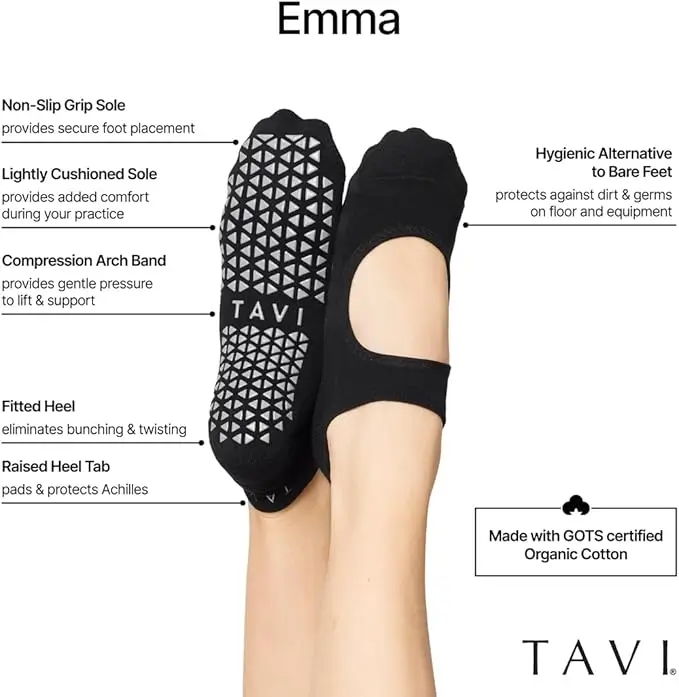
Best Overall
These are the socks almost everyone in my studio wears. The grip pattern is strong, wide, and sticks even during sweaty classes. They feel secure without feeling suffocating. The Mary Jane strap design is adorable and keeps the sock in place even during standing splits. I use these for both reformer and mat because they’re just that reliable.
Price: Premium
Best for: Everything
Pros: Top grip, stylish, durable
Cons: Price
Gaiam Grippy Studio Socks
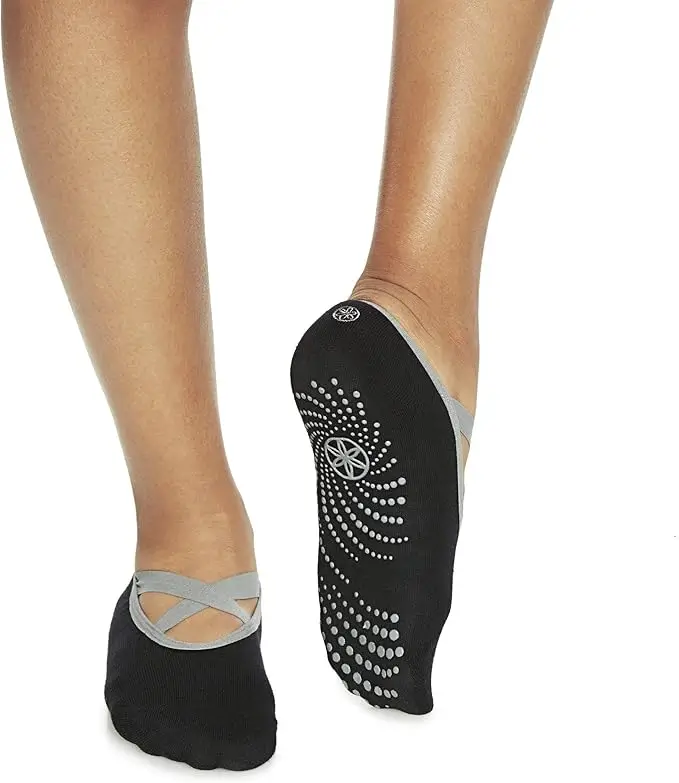
Best Budget
These surprised me. For the price, the grip is way better than you’d expect. They’re comfortable, simple, and perfect for beginners or anyone who takes occasional classes. The grip doesn’t last forever, but they get the job done.
Price: Budget
Best for: Mat Pilates
Pros: Cheap, decent grip
Cons: Grip fades
Bombas Gripper Pilates Socks

Best Premium
Bombas nails comfort. These feel like pillows on your feet but still hold strong on the reformer. They have thick arch bands, cushy soles, and very durable grip. If you want a luxurious feel, these are it.
Price: Premium
Best for: Reformer
Pros: Super soft, supportive
Cons: Price
ToeSox Half Toe Bellarina
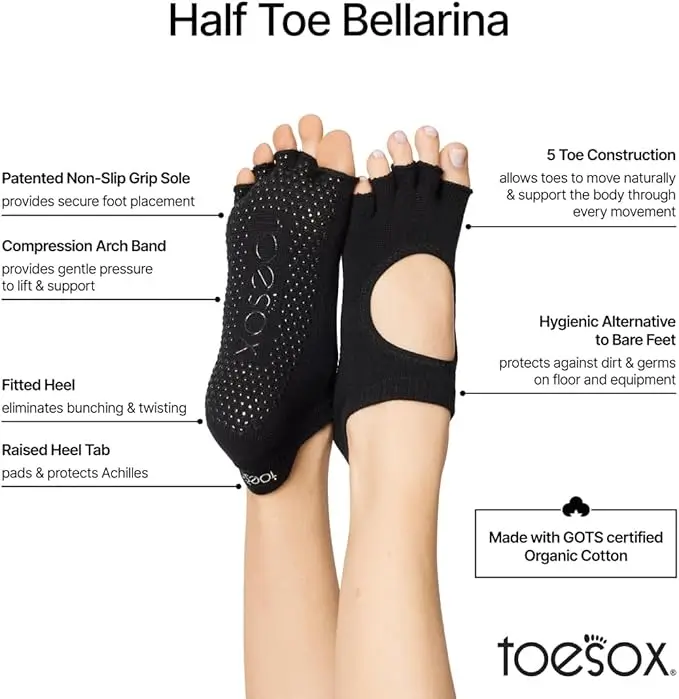
Best Toeless
If you like feeling the reformer bar directly with your toes, these are perfect. The open toe design gives you freedom, while the heel tab keeps them from slipping off. They’re fantastic for control heavy exercises like lunges and arabesque variations.
Price: Mid range
Best for: Reformer
Pros: Toe freedom, strong grip
Cons: Not great in cold weather
ABIRAM Yoga Socks Toeless
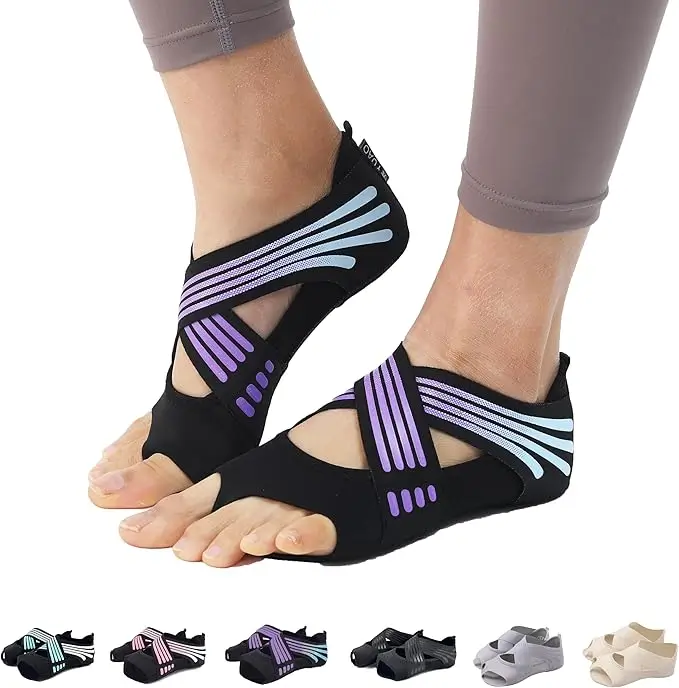
Best for Sweaty Feet
These are sleek and sporty. Great for people whose feet get warm easily. The breathable fabric is noticeably cooler than most brands. The grip pattern is solid and doesn’t peel.
Price: Mid range
Best for: Fast paced reformer
Pros: Breathable, durable
Cons: Limited cute colors
Tucketts Toeless Pilates Socks
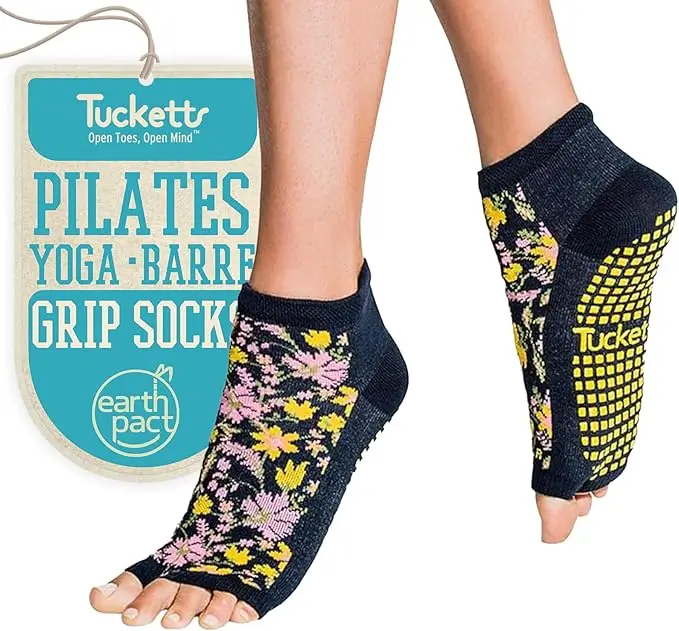
Best Stylish
If you want socks that basically double as fashion accessories, Tucketts is it. The strap design is elegant, the colors are stunning, and the grip is top tier.
Price: Premium
Best for: Studio fashion lovers
Pros: Beautiful, reliable
Cons: Price
PIGA Toeless Pilates Socks
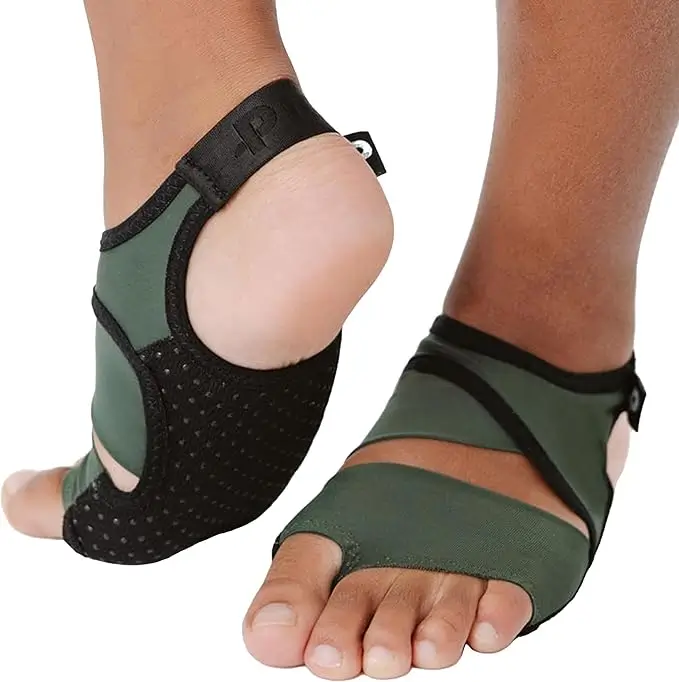
Best Mix of Feel and Grip
These are a nice middle ground for people who want the control of toeless but the comfort of thick fabric. They’re fantastic for jumpboard work.
Price: Mid range
Best for: Mat and reformer
Pros: Great grip, soft
Cons: Slightly bulky
Hylaea Unisex Non Slip Socks
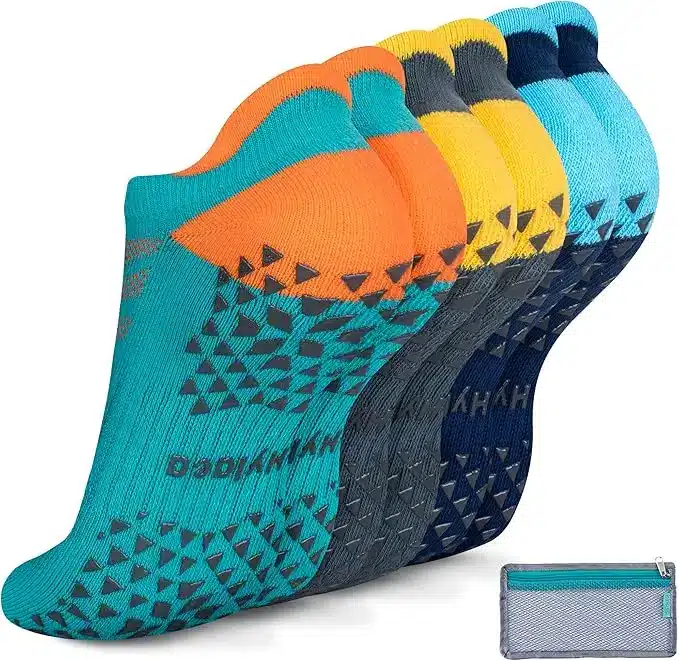
Best Grip Quality
These socks are ridiculously grippy. If you’ve ever slipped on a platform, these will fix that. They’re almost too grippy at first, but you get used to it.
Price: Mid range
Best for: Stability exercises
Pros: Super strong grip
Cons: Grip can feel aggressive
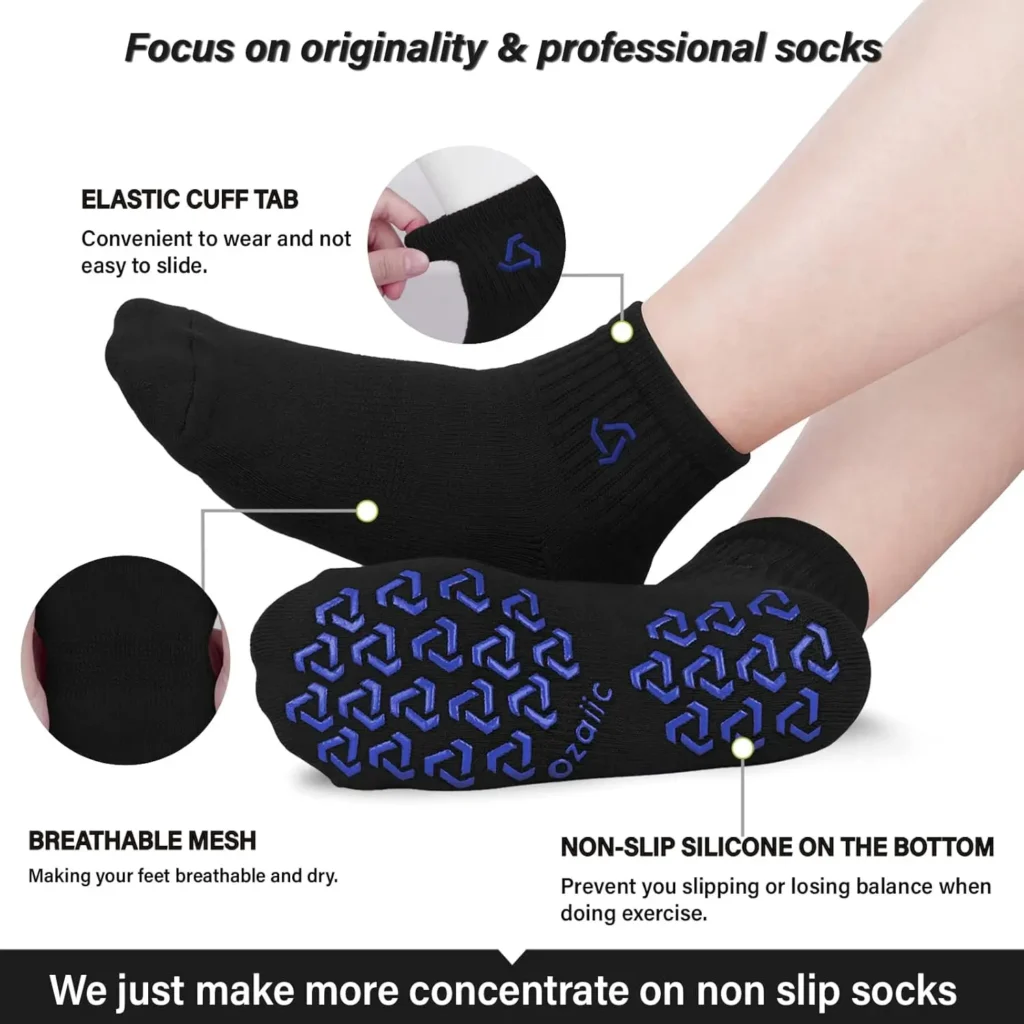
Ozaiic Grippy Pilates Socks
Best Value Pack
If you’re in the studio multiple times a week and need lots of pairs, these multi packs are perfect. Good grip, comfortable, cute designs.
Price: Budget
Best for: Weekly classes
Pros: Affordable, lots of pairs
Cons: Grip fades
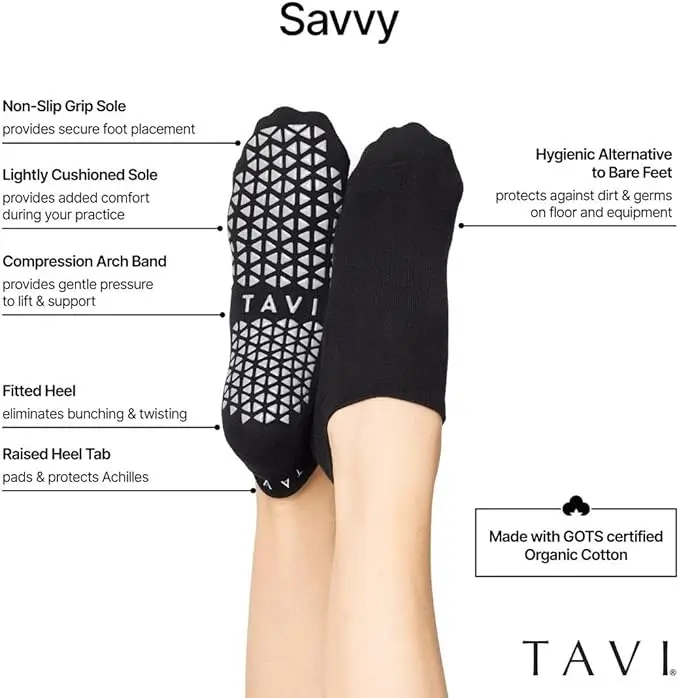
Tavi Noir Savvy
Best Lightweight
These feel almost barefoot but still give you traction. Perfect for people who hate the feeling of thick socks.
Price: Mid range
Best for: Mat
Pros: Light, flexible
Cons: Not great for heavy reformer work
Cute vs Performance Do You Have to Choose
Real talk. In Pilates, you’re going to see a lot of very stylish socks. And honestly, cute socks do make you feel good. But grip always comes first. I’ve bought adorable socks that became slippery after two classes. Not worth it. The good news is that brands like Tavi and ToeSox have figured out how to blend performance with style. You can absolutely have both if you choose the right brands.
If you love cute gear, bookmark the cute Pilates socks guide.
Toeless vs Full Toe
Toeless socks give you a better feel for the equipment. They’re my go to when I’m working on balance or specific foot placements. Full toe socks are great for warmth and general comfort. They’re also better for mat classes in winter. I switch between both depending on the workout. If the class is jumpboard heavy or includes lots of planks, I go toeless. If it’s stretching or slow reformer, I go full toe.
How to Care for Pilates Socks
Turn them inside out before washing. Use cold water. Avoid fabric softener because it coats the grip and kills traction. Air dry only. The dryer destroys silicone quickly. If the grips start peeling or smoothing out, that’s your sign to replace them. Most socks last a few months with proper care.
FAQ
Do you need grip socks for Pilates
Yes, for safety and control.
Can you do Pilates barefoot
Some studios allow it but reformer usually requires socks.
What is the difference between Pilates socks and yoga socks
Pilates socks usually have stronger grip and tighter structure.
Do Pilates socks work on carpet
Yes but grip may feel less intense.
Can you wear regular socks for Pilates
You can but you’ll slip.
How tight should Pilates socks be
Snug but not constricting.
Are toeless socks better for Pilates
For reformer, yes. For warmth, no.
Do cheap Pilates socks work
Fine for beginners, not great long term.
Can you wear Pilates socks outside the studio
You can but it may reduce grip lifespan.
How often should you replace Pilates socks
Every two to three months with regular use.
Conclusion
My top three picks are Tavi Noir Emma for best overall, Bombas Gripper for premium comfort, and ToeSox Half Toe for reformer control. Each of these performs incredibly well and lasts longer than most. If you want the safest and most enjoyable Pilates experience, invest in quality socks. Your balance, form, and confidence will thank you.